May 28, 2026 · Live Q&A 2h 0m
27 Years in HVAC, Running a NJ Shop & Building a Business That Lasts with Robert Hoerter
Robert Hoerter of DB Heating and Cooling in Waldwick, NJ brings 27 years of experience to a two-hour conversation on R32 vs 454B, suction filter dryers on every install, attic safety, duct cleaning, the $49 tuneup trap, OEM parts prices, equipment leasing, Manual J on every install, and boots-on-the-ground growth.
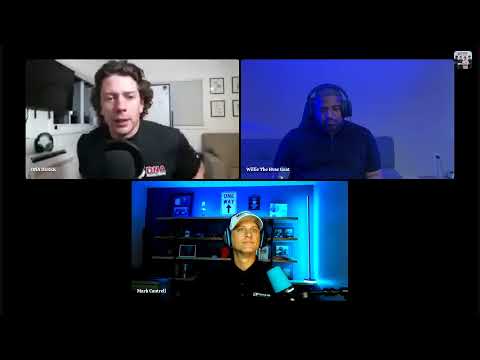
Meet the Hosts & Guest
Who's on this episode

Robert Hoerter has been in HVAC for 27 years, starting in a union shop doing major absorption systems, chillers, and large commercial crane work before building DB Heating and Cooling into a 70% residential, 30% light commercial operation in northern New Jersey. He runs a team he deeply values, stacks R32 and 454B before every season, installs suction filter dryers on every system, and runs a Manual J on every single install. He built one of his biggest early commercial accounts from a single conversation at a supply house counter.

Charlotte HVAC owner and founder of the HVAC IS LIFE community. Hosts the HVAC IS LIFE Podcast and co-hosts the weekly Live Q&A for contractors nationwide.

Residential and light commercial HVAC pro turned marketer. Runs Upward Bound Media, helping contractors win local search and turn their websites into a real pipeline.
Jump to section
- [1:50]Robert Hoerter and the Northern NJ Market
- [4:05]AI, Trades, and What We Should Be Teaching in High School
- [8:39]27 Years in the Trade — From Chillers to Running Your Own Shop
- [11:36]R454B Reclaim and Recharge with 410A — Robert's Position
- [17:28]R32 vs R454B — Why Robert Stocked Both Before Season
- [18:03]Know When Not to Touch a Job
- [22:05]The Band-Aid R22 Approach — Getting Customers to Replacement
- [24:51]The Hardest Part of Running a Business
- [28:05]Suction Line Filter Dryers on Every Install
- [33:33]Best Advice to Your Younger Self
- [38:32]Attic Safety — Plywood, Falls, and Protecting Your Guys
- [39:17]Duct Cleaning — When It Makes Sense and When to Sub It Out
- [46:53]The Loss Leader Trap — What $49 Tuneups Actually Are
- [57:07]Angie's List, Thumbtack, and Lead Service Warnings
- [1:03:25]HVAC Equipment Leasing — A Model Worth Watching
- [1:04:30]OEM Parts Prices Out of Control — Carrier and Lennox
- [1:13:27]New Construction Companies That Don't Come Back
- [1:25:15]Mitsubishi 24-Hour Power-On Before Startup
- [1:27:53]Two Installs Per Day — Quality Is the First Casualty
- [1:44:15]Boots on the Ground — The Supply House Story That Built an Empire
- [1:52:05]Realtors as a Lead Source
- [1:57:10]Manual J on Every Install — 100% of the Time
Robert Hoerter and the Northern NJ Market
Northern New Jersey is a different HVAC world from the South. You have hot humid summers, genuine cold winters, steam and hot water boilers alongside forced air systems, heat pumps being pushed hard by decarbonization incentives, and utility rates that swing enough to make the gas versus electric conversation genuinely complicated. Robert has been operating in that market for 27 years and runs DB Heating and Cooling at 70% residential, 30% light commercial — with a specific cutoff on larger commercial work where he personally has to be on the job for it to get done right.
He built his customer base primarily through word of mouth, local Facebook groups and community mom and dad pages, and aggressive local sponsorship of town events, youth sports, and public education dinners. The return on sponsorship has been consistently good. He is also now getting into video content — which is how he originally connected with Willie.
"It's a very dynamic HVAC area up here. A lot different from down south. All kinds of heating systems, all kinds of air conditioning, and heat pumps everywhere now."
Actionable Takeaway
If you are not sponsoring at least one local community event per quarter, you are leaving relationships on the table that paid ads cannot replicate. Start with one youth sports team sponsorship and measure how many calls reference it over the next 12 months.
AI, Trades, and What We Should Be Teaching in High School
Robert opened a conversation that resonated across the entire room: more parents than ever are coming to him asking about getting their kids into the trades. AI is shaking them loose from the assumption that a business degree or computer technology path is safe. When you are starting college today, you genuinely do not know what the job market looks like in four years for lower-level white collar work that is getting automated.
Robert's position — and Mark echoed it — is that high schools need to narrow kids down earlier on what they are actually good at, and trades should be a first-class option at that age, not an afterthought. Most of what is being taught in college was designed for a world that no longer exists for most of those majors. The trades, by contrast, are not going anywhere. Nobody is sending an AI to crawl your attic.
"I've never seen more parents coming up to me in the last year asking how to get their son into the trades. AI is shaking them to the root."
Actionable Takeaway
If you have not talked to a local high school about coming in to speak about the trades, schedule it. Robert goes to his son's prep school every year and consistently finds two or three kids who are genuinely interested. That pipeline is yours to build.
27 Years in the Trade — From Chillers to Running Your Own Shop
Robert started in the union working on major absorption systems, chillers, and large commercial equipment — learning the trade when wiring diagrams were the primary tool and there was no technology to look anything up. He describes it with clear-eyed appreciation: struggling through problems without help is how he built his process knowledge.
He also points out the flip side of the technology era — younger techs go straight to tech and never stumble through anything. They are too afraid to make a mistake. And Robert is direct that some of that is on owners. You have to be okay with people making mistakes. If you are not making mistakes, you are not learning.
"I wish I had what I have now back then. But in some ways, having to struggle through stuff is how I learned my processes. If you're not making mistakes, you're not learning. I promise."
Actionable Takeaway
Build a culture where mistakes are learning events, not firing events — as long as they are not the same mistake twice. Document what went wrong and what the fix was. That becomes your training material and protects you from repeating the same loss.
R454B Reclaim and Recharge with 410A — Robert's Position
A viewer asked whether reclaiming 454B and recharging with 410A violates EPA rules. Robert's answer was simple: he has not done it and is not doing it. He stocked up on 454B and R32 before season and has not been caught short. His reasoning for staying away from the reclaim-and-recharge play: he does not yet know what happens when those systems start breaking down. The outcomes are just starting to show up.
His principle across the board is to cover his company first. Anything he touches, he makes sure there is documented backing for what he did. If you go down the refrigerant swap route, put a tag on the unit, note what is in it, and make sure your liability picture is clear before you do it.
"I'm all about covering myself. If anything I touch, I make sure I cover my company first. My company comes first."
Actionable Takeaway
If you have been reclaiming 454B and recharging with 410A, document every instance with a tag on the unit noting the refrigerant installed and the date. If the system fails later and there is a dispute, you need a paper trail that shows what was in it and why.
Don't miss the next one
Get every new Q&A in your inbox
Live episode alerts, key takeaways, and resources from each guest - every other Thursday.
R32 vs R454B — Why Robert Stocked Both Before Season
When the 454B shortage hit last season, a lot of contractors who had been running Goodman and other R454B equipment were scrambling. Robert's approach going into this season was simple: buy both. He stocked R32 and R454B before the heat arrived. He runs a lot of Daikin equipment which uses R32, so he was already holding inventory of both refrigerants before the market tightened up.
He noted that in his area R32 is currently running slightly cheaper than 454B — another reason to diversify which equipment lines you stock and sell. The contractors who had diversified their equipment suppliers before the shortage were in a completely different position than the ones who had to call around begging.
"R32 is hands down the better of the two given the ability to actually get your hands on it — and right now it's a little cheaper in my area too."
Actionable Takeaway
Before next season starts, have inventory of both refrigerants your equipment uses. If you are single-supplier on both equipment and refrigerant, you are one shortage away from turning customers away. Diversify the brands in your truck before the market forces the conversation.
Know When Not to Touch a Job
One of the most important operational lessons Robert shared: there are jobs you should turn down, especially when you are busy. He described a current situation — a client with chiller systems and a contractor who got involved in something they should not have touched during a slow winter, and now it is a legal situation.
His test: if you were at medium business — not slow, not slammed — would you even consider this job? If the answer is no, the answer is no regardless of what time of year it is. The slow season is when contractors do work outside their competence area because they need the revenue. Those jobs become the liability stories that follow a company for years.
"If you would not touch this if you were medium-busy, there is your answer. Don't touch it. Because you are always the last person to touch it."
Actionable Takeaway
Write out the categories of work you will not take regardless of how slow it gets. Post that list somewhere you see it before you accept a job. Every experienced contractor has a category of work that consistently ends badly for them. Knowing yours is worth money.
The Band-Aid R22 Approach — Getting Customers to Replacement
Robert's strategy for R22 systems that are low on charge and not ready for replacement yet: fill them with a drop-in like 422B — new 22 — and sign a contract that the replacement is coming. He makes the customers aware they are getting a temporary solution and locks in the replacement job at the same time.
The threshold he uses: if the system has half a charge or less, he is not filling it. He knows he will be back tomorrow with a disappointed client on the phone. But if they have a reasonable amount of refrigerant still in the system and just need to be made comfortable until he can schedule the full replacement, the band-aid plus contract approach keeps the customer happy, keeps his crew scheduled efficiently, and avoids losing the job to a competitor who will just charge it with whatever.
"I fill them, get them going, and get a contract signed. I tell them straight: I'm going to fill you up one time. We'll get back there before you need it again."
Actionable Takeaway
If you are charging R22 systems without a replacement conversation attached, you are leaving a conversion opportunity behind every time. Build a one-sentence script for every R22 charge: today I am going to get you running, and we are going to schedule a time to talk about the replacement before you need this conversation again in an emergency.
The Hardest Part of Running a Business
Brian asked the question Robert took seriously: what is the hardest part of running your business? His answer was not equipment, not supply houses, not cash flow. It was two things — family balance and making sure his guys feel appreciated.
On the family side, he is honest: there are times of year when balance is not even an option. You have to have a team behind you at home who understands that. On the appreciation side, he makes a point of giving guys time off in the summer even though summer is peak season in the Northeast — because that is the only time the weather is actually nice enough to take a vacation. The supply house issues are real — wrong line sets, wrong sizes, miscommunication — but those are solvable problems. The human side of the business is the one that takes the most active management.
"Making sure the guys who work for me know I appreciate them. I wouldn't be where I am without these guys. It's not an easy trade."
Actionable Takeaway
If you have not told your technicians directly and specifically what they mean to the company in the last 30 days, do it this week. Not a group meeting — individually. The retention impact of a direct acknowledgment from the owner is something no pay raise can fully replicate.
Suction Line Filter Dryers on Every Install
Robert installs a suction line filter dryer on every air conditioning system he puts in — not heat pumps, but every AC install. His practice: flush the line set, install the dryer, and then check it on return visits. If the dryer tests acidic on a burnout job, that tells him something important about the state of the system. But even on a standard install where there is no burnout, the dryer goes in.
His reasoning: he has had dryers plug up and catch things that would have killed the compressor had they not been there. Mark asked whether he pulls them after install since suction dryers are not supposed to stay in permanently. Robert's answer: in his market they stay in for life. He monitors pressure drop across them and if there is ever a meaningful pressure drop, he addresses it — but in practice they hold and they earn their place every time one plugs with contamination.
"We've had them plug up and we've gone back and thank God they were there. If I'm clogging a suction filter dryer over the life of the system, guess what? You've got major problems."
Actionable Takeaway
Add suction line filter dryers to your standard install checklist. The cost is minimal. Document on the invoice that it was installed and include a note that you will check pressure drop on return visits. It is a differentiator in your proposal and a genuine protection for the compressor.
Best Advice to Your Younger Self
Willie asks every guest this question. Robert's answer was unexpectedly personal: stop worrying so much at night. Early in his career he was running major jobs — 60-ton rooftop makeup air units, crane work in West New York right next to Manhattan, coordinating with police, blocking roads, dealing with building management — and he would not sleep the night before.
Now, 27 years in, he looks back and knows those jobs went fine. The worry did not protect them. It just cost him sleep. Willie validated it immediately: the people running a business and losing sleep are the ones who genuinely care. The ones who sleep through chaos probably should not be trusted with your company. But if he could send a message back, it would be: you are going to be okay. Take it back a notch and get some rest.
"I would tell myself: take it back a notch and get some sleep. If you understand what I'm saying. Those jobs were going to be fine. I just didn't know it yet."
Actionable Takeaway
If you are lying awake before a big job, write down the three things that are actually within your control tomorrow and focus only on those. The rest is not yours to carry tonight.
Attic Safety — Plywood, Falls, and Protecting Your Guys
Robert brought up something most HVAC owners handle reactively: attic safety. He stocks about 80 sheets of 3/4 plywood at his shop at any given time and includes plywood in every attic install quote as a standard line item. The ask to the customer: how much do you store up here? Do you want a few more sheets? Your Christmas tree could go up here. His real reason is simple — if he puts down plywood, his guys are not falling through.
He described a job where a tech stepped through a ceiling on a five-ton coil change on a hot day. The tech was fine, but a few feet to the left and it would have been a 20-foot drop. Mark had the same thing happen to him on a new construction walkway with a missing board section. These are not freak events. They are predictable and preventable with plywood. Robert also noted that asking customers about the attic plywood situation is a small separation from competitors who just go up, do the job, and leave.
"I stock about 80 sheets of plywood. On every sale I really try to include how many pieces are going in that attic. My guys are not falling through. That's the reason."
Actionable Takeaway
Add a plywood line item to every attic access install quote. Even two sheets changes the safety picture. It costs almost nothing relative to the job, your guys appreciate it, and customers who notice it see a contractor who actually thinks through the whole job.
Duct Cleaning — When It Makes Sense and When to Sub It Out
A viewer who had left HVAC installation to start a duct cleaning company asked the group's thoughts. Robert bought a Nikro pull-push system years ago and sold duct cleaning with his installs for a while. He stopped. The problem: his installers and technicians were spending the day on a duct cleaning job instead of doing the installs he was paying them for. The income from the cleaning was not offset by what he was losing by pulling those techs off installs. The machine is still sitting in his shop.
Willie had the same experience. Both refer duct cleaning out to companies they trust and sub it. Mark offered the complementary advice: if you are starting or running a duct cleaning business, partner with HVAC shops that are too busy to do it themselves. You become their go-to sub. And make sure you are offering aero-seal duct sealing as an upsell — that is where the margin is and it pairs naturally with the cleaning service.
"God bless duct cleaning guys. The amount of work you have to do to do it right. It got to a point where it was costing me more money. I still have the machine. Come up and grab it."
Actionable Takeaway
If you are an HVAC contractor trying to add duct cleaning, do the math on what an installer's time is worth per day versus what the duct cleaning brings in. If the install number is higher, sub it out and build the referral relationship instead.
The Loss Leader Trap — What $49 Tuneups Actually Are
Willie ran an experiment the weekend before the show: called six or seven large HVAC companies asking about tune-ups. Every single one was under $100. One was free. Mark named what this is — a loss leader. The company is not trying to make money on the maintenance visit. They are buying access to your house. Once they are there, a commission-only tech has to make a sale to justify the trip and the company's cost structure. That is not a maintenance. That is an inspection designed to identify the most convincing reason to sell you a new system.
Robert described the pattern he sees constantly: customers who called a competitor for a $49 tuneup and end up with a $19,000 system quote, no explanation of what was actually wrong, just a recommendation to replace. When he gets there for a second opinion, the system is fine. The lesson is not that you should charge $49 — it is that you should understand the game your competitors are playing so you can explain to your customers why your pricing is what it is.
"If you're doing a $49 tuneup, you're paying a sales guy to come to your house. That's what you're paying for. He's commission-only. He has to find something."
Actionable Takeaway
Build a one-paragraph explanation of what your maintenance includes and why it costs what it costs. Put it on your website. Send it in your booking confirmation. When a customer asks why you are more expensive than the $49 guys, you have the answer ready before they need to ask.
Angie's List, Thumbtack, and Lead Service Warnings
This is the advice that every new contractor needs to hear before they spend a dollar. Mark laid it out plainly: Home Advisor, Angie's List, Thumbtack — they are all the same model. They sell your lead to ten of your competitors simultaneously. You are all racing to call the same person who is just looking for the lowest price. You still pay for the lead whether you get the job or not. And once you are in their system, they never stop calling to upgrade your package.
Robert confirmed he tried Angie's List when he started his business and learned the lesson fast. The way he grew — and still grows — is by going to local businesses, delis, Dunkin Donuts, the car wash, Home Depot near the thermostats, and dropping cards. That works. Mark added the history: Home Advisor became Angie's (after a $7 million lawsuit for bad practices, the company just rebranded) and the model never changed.
"I would say 100% — do not do Angie's List. That is one of the worst things you could do. They sell your lead to 10 competitors and they never stop calling asking for more money."
Actionable Takeaway
If you are currently paying for Angie's, Thumbtack, or Home Advisor leads, calculate your actual cost-per-job from those platforms including all the leads that went nowhere. Compare that to what you spend at the local chamber or sponsoring one youth sports team. For most small shops, the math is not close.
HVAC Equipment Leasing — A Model Worth Watching
Willie had recently met with a solar company that is getting into HVAC financing via a leasing model: 10 to 12-year contracts, repair-free during the term, with an option to lease a new system or buy out at the end. Robert engaged with it seriously. His take: for high-net-worth clients who want to run their personal finances on a monthly predictable basis — think car leases — it actually makes sense.
The equipment reliability concerns of the current era make a strong case for it. When a Carrier or Lennox variable speed is going to cost $1,500 or more for an OEM motor at year 13, knowing your monthly payment is fixed and the repairs are covered changes the math for certain buyers. Robert noted he is personally halfway tempted to lease his own system as an HVAC contractor — which says something about where equipment reliability has gone.
"I can almost see where a lease makes sense for certain people. I'm an HVAC guy and I don't have peace of mind with these units these days."
Actionable Takeaway
Research one HVAC leasing program currently operating in your market. Understand the terms for the contractor, the customer, and the financing company. If the numbers work for your customer base, having a leasing option ready for the right customer is a competitive advantage most of your competitors do not have.
OEM Parts Prices Out of Control — Carrier and Lennox
The group spent significant time on a reality every contractor is navigating: OEM replacement parts are pricing systems out of repair and into replacement faster than ever. Robert described a 13-year-old variable speed 5-ton Carrier system where the OEM motor quote came back from his office at a number that made him call the customer to apologize. He ended up telling them to call Carrier directly and ask why.
He is now using aftermarket service motors on some of those jobs — which saves the customer money but requires his techs to know how to program and set up a non-OEM motor correctly. Mark brought up an 80% efficiency Carrier furnace with an induced draft motor running $850 at cost. Willie confirmed Lennox is just as bad. The practical outcome: at $1,500 for a motor on a 12-year-old system, you are not really competing with repair pricing anymore. You are competing with replacement pricing and the customer knows it.
"A $1,600 motor on a 13-year-old system. The customer goes 'that's crazy' and I told him: call Carrier and ask them what's crazy. Because that's just what it is now."
Actionable Takeaway
Build a reference sheet of the most common OEM part prices for the brands you service, alongside their aftermarket alternatives where they exist. When a customer balks at a repair quote, being able to show them exactly what the OEM part costs — and that you found a legitimate alternative — builds trust and keeps the repair conversation alive.
New Construction Companies That Don't Come Back
Robert described taking over a 318-unit apartment complex where the installing company — from out of state — had sent a van full of guys with R410A during the last months of the warranty period, charging every unit to get out from under the warranty before they closed their doors. He went back unit by unit and found overcharged systems with every service valve in the building leaking. 150 suction valves replaced. They had not even pulled the pins in some of them.
Willie connected this to what he sees constantly in Charlotte new construction: companies that come in from out of state, do a whole subdivision, give six months of labor warranty, and are gone. The phone number is disconnected or the company was sold. The homeowner who calls for service at year two has no recourse. That is the opportunity for you — but only if you show up and do the job right the first time.
"If I had a dollar for every call I went to that I didn't do, I'd be a rich man. They already got the big payday. Now nobody answers the phone."
Actionable Takeaway
In your next marketing push to new neighborhoods in your service area, specifically target homes that are two to four years old. Those are the homes whose warranty work contractors have abandoned. A postcard to a two-year-old subdivision that says we service what others installed is a message that lands.
Mitsubishi 24-Hour Power-On Before Startup
Robert raised something that surprised the room: certain Mitsubishi systems now require 24 hours of power-on before the system can be started up for the first time. The reasoning is crankcase heater warmup, possibly oil migration during shipping. Robert confirmed Mitsubishi's tech support held the line on it even when he pushed back.
His workaround: he has a dedicated technician whose job is to go back the day after install and do the official commissioning. Willie noted he could not operationally hang with that in peak season when the house needs air today. Robert acknowledged the conflict — it works in 70-degree spring weather, but in 90-degree July it is a different conversation with the homeowner.
"They wanted 24 hours powered on before startup. I asked and asked. They held firm. So now I have a tech whose job is to come back the next day and commission."
Actionable Takeaway
If you are installing Mitsubishi equipment, verify the startup requirements for your specific model before the install day. Have a script ready for customers who need air that day explaining the manufacturer requirement. The last thing you want is a startup call the next morning from a customer who fired it up themselves at midnight.
Two Installs Per Day — Quality Is the First Casualty
Robert and Willie both pushed back hard on the industry trend of companies expecting install crews to complete two systems in a day on piece rate. Robert is not doing it. You cannot pull a vacuum properly, verify the charge, program the equipment, document the startup, and leave a clean job behind at two units per crew per day. The companies doing it are paying $400 per unit and the quality shows when the next contractor shows up behind them.
Robert described going to a job where the air handler was hanging with one corner 18 inches lower than the other — unit strut just hanging there. The installing company was not answering the phone. He also pointed out: when you rush a Mitsubishi or Daikin startup, you find out later on a callback when something is not right that a 45-minute proper commissioning would have caught.
"You can't do a solid good job and do two of them a day. Even on a straight swap. The vacuum, the startup, the charge verification — it just can't happen at that pace."
Actionable Takeaway
Calculate your actual loaded cost per install including callbacks and warranty work when your crew rushes. Then compare that to slowing down and doing one solid install per crew per day. For most small shops, the callback cost from rushing more than erases the revenue gain from the second unit.
Boots on the Ground — The Supply House Story That Built an Empire
Robert told the story that should end every argument about whether boots-on-the-ground marketing works. Early in his business he was at a supply house running down a capacitor or contact. A man walked in — looked like a homeowner — and asked for some service help. The counter guy had an attitude. Robert watched the man turn to leave and stopped him. Asked what he needed help with. Followed him 15 miles to his location.
Walked into an apartment complex with 218 units. Spent the whole week fixing 32 of them. Did 12 system replacements. Two to three weeks later the head manager handed him 12 additional properties. He worked 80 to 90 hours a week after that to build the company around what that single conversation opened up. One supply house counter interaction. One decision to say something instead of nothing.
"I followed this guy 15 miles. Walked into 218 units. 12 replacements in a week. Then he handed me 12 more properties. All because I said hi and asked what he needed."
Actionable Takeaway
Carry cards everywhere and make a habit of starting conversations in spaces where homeowners and property managers cross your path — supply houses, Dunkin, hardware stores, anywhere near the thermostat aisle at Home Depot. Robert puts cards directly into the thermostat packaging slot on the shelf. You cannot buy that placement with any ad.
Realtors as a Lead Source
Julia asked about realtors. Robert works with six or seven regularly and considers them a strong source. His angle: when a realtor needs a fast estimate to save a deal from falling apart, he goes. He has even done free walk-throughs for long-standing realtor relationships because the deal that closes is worth far more than the hour he spent.
Willie added the principle he has followed with realtors: align with the buyer's agent, not the seller's. The seller wants a patch job to get to closing. The buyer wants to know the truth. If you can tell the buyer what they actually have and give them the real picture, that buyer becomes your customer when they move in. Robert also described going to open houses early in his career and putting his sticker directly on the boiler, the condenser, anywhere that the next owner would see his name the first time they had a problem.
"One HVAC inspection to help a realtor close could turn into an install. Those people are new clients. Convert them."
Actionable Takeaway
Reach out to one local realtor this week and offer a free HVAC inspection the next time they have a deal at risk. No pitch. Just a fact-based report. When the deal closes, that buyer is your new customer and the realtor has a reason to call you the next time.
Manual J on Every Install — 100% of the Time
The final question of the night was how often the group runs Manual J calculations. Robert's answer: 100%. Every single install. He uses Right Suite and is actively evaluating Conduit Tech — the iPad LiDAR load calculation tool Mark had introduced in a previous episode. Robert said he has been back and forth with the Conduit Tech team and just has not had time to sit down and go through it yet.
Mark reiterated what he has said before: once you use it on a real job, you will not go back. The combination of a real load calc and being able to show the customer on the iPad exactly where the ductless head is going on their actual wall makes the sale faster and kills the competitive comparison before it starts.
"Manual J on every install. 100%. We run it every time without exception."
Actionable Takeaway
If you are not running load calculations on every install, start with your next one. Pick any software — Right Suite, Manual Calculator, Conduit Tech — and run the numbers before you finalize the proposal. Document the result. If the load tells you the existing system was oversized, say so in writing. Your proposal now includes something your competitors almost certainly did not do.
Featured Quotes
"I've never seen more parents asking about the trades. AI is shaking them to the root."
"I'm all about covering myself. Anything I touch, my company comes first."
"Making sure the guys know I appreciate them. I wouldn't be where I am without these guys."
"If you're not making mistakes, you're not learning. I promise you that."
"100% — do not do Angie's List. They sell your lead to 10 competitors and never stop calling for more money."
"I followed this guy 15 miles. Walked into 218 units. All because I said hi and asked what he needed."
"Manual J on every install. 100%. We run it every time without exception."
Questions Answered
Click a timestamp to jump to that moment on YouTube.
Featured Resources & Sponsorship
Tools, offers, and partners from this episode
Episode Sponsor
Free consultation + 10% off all services for HVAC IS LIFE listenersUpward Bound Media
HVAC-specialized SEO, websites, and digital marketing built by people who actually know the trade. Free consultation + 10% off all services for HVAC IS LIFE listeners.
Tools & products mentioned
Software
Load calculation software Robert uses on every install.
Software
iPad LiDAR-based load calculation and ductless placement visualization tool. Robert is evaluating it; Mark recommends it.
CRM
Field service CRM Robert has used for six years including maintenance program scheduling and QuickBooks integration.
Duct Cleaning Equipment
Negative pressure duct cleaning system Robert purchased and later stopped using in-house. He now subs duct cleaning out.
Guest offers & downloads
From Robert Hoerter
Want to reach HVAC pros?
Sponsor a future episode of HVAC IS LIFE.
Guest Resources
Robert Hoerter
Guest — Owner, DB Heating and Cooling · Waldwick, NJ · 27 Years in the Trade
Robert Hoerter has been in HVAC for 27 years, starting in a union shop doing major absorption systems, chillers, and large commercial crane work before building DB Heating and Cooling into a 70% residential, 30% light commercial operation in northern New Jersey. He runs a team he deeply values, stacks R32 and 454B before every season, installs suction filter dryers on every system, and runs a Manual J on every single install. He built one of his biggest early commercial accounts from a single conversation at a supply house counter.
Topics
Subscribe for more
Never miss a live Q&A.
HVAC IS LIFE airs every other Thursday. Hit subscribe on YouTube and join the email list for episode alerts and show notes.
Email alerts
Get the next episode in your inbox.
Related Episodes
More Q&As from the crew.

September 3, 2026
Own Your Own HVAC Warranty Company: How Reinsurance Really Works
Tim Byrd of Warranty-RE explains how HVAC contractors can own their own warranty and reinsurance company - stop paying third parties, keep the reserves, cut taxes, and clear contingent liability before a sale.

August 6, 2026
HVAC IS LIFE Is Now a Free Platform for Contractors & Techs: Vetted Directory, Job Board & Training
Mark and Willie unveil the new hvacislife.com: a vetted contractor directory, a free job board with no recruiters, and a training library - plus airflow before charge, load calcs, and lead gen that actually works.

July 23, 2026
How to Sell Your HVAC Business - And What It's Actually Worth with James Gorzynski
Certified Exit Planning Advisor James Gorzynski on what an HVAC business is really worth, SDE multiples, clean books, the 345 method, private equity, license transfer, and what kills deals.
July 9, 2026
All-Electric HVAC, Reddit Leads & AI Search with Derek Aarstad of DNA Heating and Cooling
Derek Aarstad of DNA Heating and Cooling on getting 3-4 clients a month from Reddit, showing up in AI search, going all-electric, combustion analysis, and building a boutique HVAC shop that lasts.
Take it further
Bring this conversation into the community and the education library.