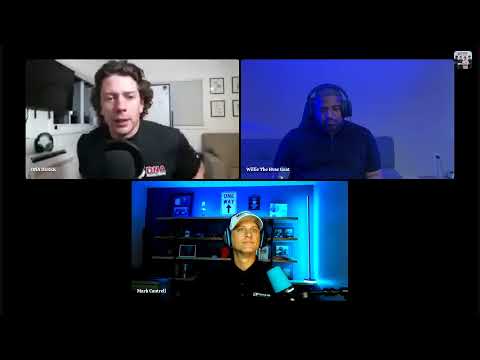
June 25, 2026 · Live Q&A 1h 26m
Sales Training, The Threading Effect & Buyer Psychology with Matthew Maleske of CTM
CTM founder Matthew Maleske breaks down HVAC sales coaching — the washer-dryer buyer test, the threading effect, rapport building, and what every contractor should do today.
Meet the Hosts & Guest
Who's on this episode

Guest
Matthew Maleske
Founder, CTM Coach Train Motivate · HVAC Sales & Business Coach · 27 Years in the Trade
Matthew Maleske started as a maintenance tech with zero HVAC knowledge and built his way up through IAQ sales, management, and training at Service Experts — one of the largest HVAC chains in the country with 200 locations — ultimately becoming their western regional sales and service trainer, responsible for 44 companies across the western US. He then took that experience into the private sector as general manager for General Air Conditioning under mentor Frank Harrison. In 2017 he co-founded CTM Coach Train Motivate with his wife Alyssa, bringing on-site ride-along training and virtual coaching to independent HVAC contractors across the US and Canada. CTM's philosophy: manage the process, not the people. Everything CTM teaches is process-driven and delivered on-site, including a monthly Matt Chats workshop covering the five business practices most contractors do not understand.

Host
Willie Ward
Owner, GOAT Heating & Cooling · HVAC IS LIFE Founder · Charlotte, NC
Charlotte HVAC owner and founder of the HVAC IS LIFE community. Hosts the HVAC IS LIFE Podcast and co-hosts the weekly Live Q&A for contractors nationwide.
Jump to section
- [0:51]Matthew Maleske and CTM Coach Train Motivate
- [3:37]On-Site vs Virtual — How CTM Delivers Training
- [7:12]What HVAC Sales Training Actually Is
- [9:46]The Psychology of Training — Why One Round Is Never Enough
- [13:26]The Communication Gap — iPad Techs and Airflow Blind Spots
- [16:48]Projection — When Techs Sell to Themselves Instead of the Customer
- [19:13]The Washer and Dryer Buyer Test
- [30:03]Preset Pricing — Four Options, No Exceptions
- [32:50]Getting Out of Your Own Way — The Biggest Sales Killer
- [35:54]Awareness on a Call — Reading the Room and Breaking Tension
- [38:18]Empathy as a Sales Skill — Teachable or Natural?
- [41:57]Rapport Building — 90% of the Training
- [45:13]Crawling Ductwork with a Polaroid Camera
- [46:42]The Threading Effect — One Customer's Journey
- [53:03]Technician Appearance — Your Brand in the Field
- [57:42]Why CTM Is Purple Everywhere
- [1:04:09]Matt Chats — Monthly Business Workshop
- [1:16:24]The One Thing to Implement Today
Matthew Maleske and CTM Coach Train Motivate
Matthew Maleske did not start in HVAC knowing anything about HVAC. He got hired as a maintenance tech because he could talk to people. He learned the IAQ side of the business first — duct sealing, duct cleaning, filtration — and became one of the top IAQ sales guys in the country at Service Experts, a 200-location national organization. He moved into management and training, eventually becoming their western regional sales and service trainer covering 44 companies across the western United States. He left to become general manager for General Air Conditioning, where his mentor Frank Harrison taught him the operational side of running a great company. He took both things — the training process and the business understanding — and built a company. Originally called Benchmark, it became CTM Coach Train Motivate when he relaunched it with his wife Alyssa in 2017. They now work with HVAC contractors one-on-one across the US and Canada, with a philosophy built around managing the process rather than managing the people.
"I've been in the trade for 27 years. Started like most guys — working in the truck. I got hired to be a maintenance tech because I could talk with people."
Actionable Takeaway
If you have someone on your team who can talk to people, that skill is not secondary to their technical knowledge. It is often the thing that determines whether the technical knowledge ever gets sold. Invest in developing it.
On-Site vs Virtual — How CTM Delivers Training
CTM's core model is on-site. Rather than requiring contractors to send techs across the country to training events, Matthew and his team come to the company and deliver the training within their own environment. They also do live ride-alongs after classroom instruction. Beyond the initial on-site work, CTM maintains clients through weekly virtual touchpoints — because the follow-up is where the behavior change actually happens. They also supply training content for distributors, including Johnstone and Daikin, for the sales portion of those manufacturer programs. The baseline is on-site. The ongoing reinforcement is virtual. Both are necessary.
"Instead of you sending all your guys off to get training, we'll come bring the training to you — work within your facility and then do live ride-along training as well."
Actionable Takeaway
If you have sent one or two techs to an off-site training and wondered why nothing changed when they came back, this is why. Training that happens inside the company environment, with the whole team present, and followed by live ride-alongs, produces different results than a class in a hotel conference room.
What HVAC Sales Training Actually Is
Matthew draws a clear line: CTM does not teach techs how to turn tools. They teach the process from the truck to the kitchen table — how to communicate in a way that makes the homeowner engage, ask questions, and ultimately request the sale rather than resist it. Their core philosophy is a question: would you rather try to sell something to a homeowner or have the homeowner ask you for the sale? The entire training framework is built around creating the conditions where the homeowner asks. That means teaching techs to be aware of what they are doing and saying on every call, how to deliver option presentations from what they heard rather than from a script, and how to manage the psychology of the conversation at every stage.
"Our whole philosophy is: would you rather try to sell something to a homeowner or have the homeowner ask you for the sale? Teach the guys how to communicate."
Actionable Takeaway
Evaluate every tech on your team not on their close rate, but on their ability to get a homeowner talking. If the homeowner is not volunteering information, the tech is selling rather than communicating — and selling is harder, slower, and less reliable.
The Psychology of Training — Why One Round Is Never Enough
Matthew uses a simple model to explain to owners why a single training event is not sufficient. Every group starts at a baseline level. Training produces a spike — motivation rises, performance improves, everyone is excited. Then, because it takes 21 days to change cognitive behavior, people start drifting back toward their old habits. Not all the way — they land a bit above where they started. Then the next training round, spaced three to four months later, produces another spike. They level off again, slightly higher than the second baseline. Over the course of a year, the company has moved up a full level.
This is why Matthew's contracts are annual memberships with recurring touchpoints — because a single event produces a single spike that disappears. He learned this the hard way at Service Experts: his boss told him to go back and deliver the same training again to the same people. He expected glazed-over eyes. He got the same intentful attention, the same laughs at the same jokes. The same training, delivered again, still worked — because the first time they were hearing it, the second time they were practicing it.
"It takes 21 days to change cognitive behavior. You see a spike, they level off, then the next training produces another spike. Over the course of time, you've leveled them up a whole level."
Actionable Takeaway
If you have done one training and wondered why nobody changed, the answer is not the training. It is the repetition. Set three to four trainings per year, spaced out, with reinforcement between them. That is what actually shifts behavior.
Don't miss the next one
Get every new Q&A in your inbox
Live episode alerts, key takeaways, and resources from each guest — every other Thursday.
The Communication Gap — iPad Techs and Airflow Blind Spots
Matthew flagged something that he sees in his Daikin training work that concerns him deeply: 95 to 97 percent of HVAC techs have never done or fully understand a heat load calculation, and do not understand what CFM is in duct work or how airflow affects static pressure. The technology has moved faster than the understanding. Techs hook up probes to their phones, get a superheat and subcool reading, and cannot tell you what the number actually means in terms of what is happening in the system.
Willie connected this to the airflow-before-charge principle that almost nobody is actually applying. The consequence is that as inverter systems become standard, the ductwork conversation becomes unavoidable — and a proper install that includes ductwork is often over $25,000, which most techs cannot bring themselves to propose because they project their own budget onto the customer.
"95 to 97% of our trade has never done or understands how a heat load works and doesn't understand what CFM is in duct work. This is where technology is taking us. We're in a world of hurt here in the near future."
Actionable Takeaway
If you are not requiring load calculations and static pressure readings on every install or tune-up, you are not protected when those systems come back as callbacks. Document the airflow picture before the equipment goes in. It is the single best liability shield you have.
Projection — When Techs Sell to Themselves Instead of the Customer
Matthew calls it projection — and it is one of the most common and most damaging patterns he finds in technicians. A tech walks into a job, looks around, decides this person cannot afford the right solution based on what they see around them, and adjusts the proposal down before they have even asked a question. They project their own value system and their own budget onto the homeowner. The result: that tech has no problem charging $500 for a capacitor because that feels like a small number to them — but they will not propose a $25,000 full system and ductwork job because they cannot imagine spending that themselves. The inverse is also true — walk into a Ferrari garage and the tech inflates their confidence in ways that are not based on what was actually said. Neither is accurate. Neither serves the customer.
"They project their value system onto the homeowner as if it's their own. Well, if I can't afford 25 grand, there's no way you can afford 25 grand. They get scared. But they have no problem selling a capacitor for $500."
Actionable Takeaway
Before your next training session with your team, ask them to write down the highest ticket they have ever proposed. Then ask them why they have not proposed higher. The gap between what they will quote and what the customer would have bought is the projection problem. It is a belief problem, not a pricing problem.
The Washer and Dryer Buyer Test
This is the concept that dominated the evening and sparked the most discussion. Matthew's premise: most people think everybody buys based on price. If that were true, we would all be driving Toyota Corollas and watching 32-inch TVs. Instead there are three buyer types — best of the best, best they can afford, and pure price — and one room in the home tells you which one you are dealing with more accurately than any other indicator. That room is the laundry room. Nobody cares about their washer and dryer. Nobody remodels the laundry room to impress guests. Nobody buys a washer and dryer to keep up with the Joneses. So what they bought there reflects their natural buying habits with no social performance attached.
A basic white flip-top model with a turn dial? Price buyer. Something with color and digital controls? Best they can afford. An all-in-one steam unit? Best of the best. Matthew has trained salespeople on this pattern and then watched them on ride-alongs until they started sending him the look — the quiet glance that says I saw the washer and dryer, I know what I'm working with. It is not infallible, but it is directionally accurate enough to shift how you enter the options conversation.
"What room will determine what kind of buyer they are? The laundry room. Nobody shows you their laundry room. Nobody remodels it to impress people. So what they bought there reflects how they actually buy."
Actionable Takeaway
On your next service or install call, glance in the laundry room before you build your recommendation. You are not judging — you are calibrating. Know which tier to lead with and which tier to emphasize. And remember: the price never changes regardless of what you see. Only the emphasis does.
Preset Pricing — Four Options, No Exceptions
Matthew's position on pricing is clear and non-negotiable: your price never varies, never sways, and never changes based on who is standing in front of you. He cites it directly: "I don't care if you're 18 years old or a 92-year-old lady with one eye — you're going to get the same thing from me every single time." The framework he recommends is four options for residential replacement: a top-tier 20 SEER plus unit, an 18 SEER two-stage, a 16 SEER, and a 13 or 14 SEER basic — and he keeps an off-brand option in his back pocket for price-conscious buyers who need to see something lower. What the washer and dryer test changes is not the options — it is which tier you emphasize going into the presentation. With a best-of-the-best buyer you lead with the top and walk them through why it is the right choice. With a price buyer you lead with the top so they have context, then tell them honestly it is not the right fit for their situation, and walk them toward the two that are.
"Price never changes. It never varies, never sways. I don't care if you're 18 years old or a 92-year-old lady with one eye. You're going to get the same thing from me every single time."
Actionable Takeaway
Write down your four option tiers with fixed prices right now. If you are changing your quote based on the neighborhood or the condition of the house, you are introducing inconsistency that will get you in trouble legally and reputationally. Same price, same options, every time. Adjust the emphasis, not the numbers.
Getting Out of Your Own Way — The Biggest Sales Killer
When Matthew was asked what throws people off their process the most, his answer was simple: they get in their own way. We all judge. Techs judge the neighborhood. They judge the condition of the home. They make assumptions about what the homeowner can or cannot afford and then act on those assumptions before anything has been confirmed. The worst of both mistakes — assuming too little or assuming too much. Walking into a hoarder's home and deciding they cannot spend money. Walking into the Ferrari garage and assuming money is no object. Both are projections. Both are wrong until confirmed. The process is what gets you out of your own head. When you have a defined sequence of steps to run through, you are not improvising based on what you see and feel in the first 30 seconds. You are executing a process that has already worked, and the process is what holds you straight when your emotions want to adjust.
"They get in their own way. We all judge. We go into a home that's a noticeably lower income area and we start saying they can't afford this. And you do the opposite in the Ferrari home. That's what I think is the hardest thing — one's own emotions."
Actionable Takeaway
The next time you catch yourself adjusting your presentation before you have asked a single question, stop. Run the process exactly as written. Ask the questions. Let the answers calibrate you instead of the neighborhood.
Awareness on a Call — Reading the Room and Breaking Tension
Matthew described something he demonstrates to techs on ride-alongs that they often do not notice in the moment: he will make a joke at a point when the homeowners are getting tense or starting to argue between themselves. After the call, he will point it out to the tech. "Did you notice when I made that remark?" They remember the laugh but not the reason. "That's the whole point — they were getting heated and I needed to break that tension before it went off the edge." Awareness on a call means being present enough to feel the energy in the room and respond to it in real time. Some people have that naturally — it is empathy, it is reading a room. Willie described the same thing — he knows immediately when he walks into a house whether he is walking on eggshells. That situational awareness is partly natural and partly built through reps, and it is one of the higher-level skills that Matthew focuses on in coaching.
"They were sitting on the couch and it was getting tense and I made that funny remark and they started laughing. Do you know why I did that? That's the whole point about being aware of what's going on."
Actionable Takeaway
On your next three calls, pay attention to the energy in the room at the moment you start presenting options. Is the homeowner relaxed? Are the couple agreeing or starting to diverge? Your presentation will land differently in each case. Start noticing before you start adjusting.
Empathy as a Sales Skill — Teachable or Natural?
Matthew gave one of the sharpest answers of the night on this question. He drew on his experience as a seventh-grade math and science teacher in a low-income area, where kids were operating at second and third-grade levels while the state curriculum demanded pre-algebra. His mentor told him: it is not your job to teach them pre-algebra if they are not ready for it. Your job is to bring them up one level from wherever they are. If they come in at a third-grade level and leave at a fourth or fifth, you did a fantastic job. He applies the same framework to technicians. You see where they are, build within their construct, learn their personality, and teach them ways to organize their thoughts and say things in their own way. CTM does not use rigid scripts. Scripts break down the moment something unexpected happens and the tech does not know their line. Instead they teach the concept — why are we asking this question, what are we listening for — and let the tech find their own words for it.
"It's not your job to teach them pre-algebra if they're not ready. Your job is to bring them up from whatever level they're at to one more level. That's how you have to work with technicians."
Actionable Takeaway
Stop trying to get your techs from zero to masterclass in one training weekend. Identify the single biggest gap — usually rapport in the first 10 minutes — and build from there. One improvement that sticks is worth more than 20 that were introduced and forgotten.
Rapport Building — 90% of the Training
CTM's on-site training is three days — half instruction in the morning, half ride-along in the afternoon. Matthew's disclosure surprised Willie and Mark both: about 90 percent of those 12 to 14 hours of instruction is spent on rapport building. Not technical knowledge. Not pricing. Not closing. Rapport. The reason is that technicians are so lacking in the foundational skills of asking questions, making a time commitment, and getting homeowners to open up that the entire conversation about options and pricing is irrelevant until those basics are working. The first 10 to 15 minutes of a call are where the whole sale is either set up or destroyed. Every piece of information the tech needs to build the right presentation comes from what the homeowner says in that window — if the tech knows how to ask and, more importantly, how to listen.
"About 90% of that training is on rapport building. Teaching them how to ask questions, get a time commitment, apply those things in a way that benefits you at the end of the call. It's amazing how much time that takes."
Actionable Takeaway
Time the rapport-building portion of your techs' next call — from the driveway to the moment they start talking about the equipment. If it is under five minutes and includes no open questions about the homeowner's experience with the system, they are skipping the step that makes everything else easier.
Crawling Ductwork with a Polaroid Camera
Matthew grounded the conversation with a story about where the work actually starts. When he was doing IAQ sales — duct sealing, duct cleaning, filtration — there was not one duct system he did not crawl to determine whether it needed treatment. That meant getting into attics above vault ceilings, getting under houses below duct work in crawlspaces, going face-to-face with raccoons, and documenting everything with a Polaroid camera. The contrast with today is sharp. Now Matthew sees techs who get to the top of the attic ladder and stop. They take a few photos from the platform, get their phone out, and come down. They do not go to the corner where the problem is. The process of thoroughly inspecting a system cannot be separated from the process of selling the repair or the upgrade — if you do not know what is actually in there, you cannot present a genuine finding with confidence.
"There wasn't one duct system that I didn't crawl to determine if they needed this stuff. I've been face to face with raccoons. I got after it getting dirty, discovering where the issues were, taking a picture with my Polaroid camera."
Actionable Takeaway
If your techs are not going to the far corner of the attic, they are not finding the problem. They are finding the easiest problem. On your next ride-along, follow the tech into the attic and see how far they actually go.
The Threading Effect — One Customer's Journey
Matthew introduced a business framework he calls the threading effect. The name has a different meaning when you search it online — think of a needle and thread running through one customer's entire journey with your company. It starts with what makes the phone ring — that is your marketing and branding. The call goes to a CSR whose capture rate most owners think is 93 percent and is actually closer to 45 or 50. Half of what was spent on marketing is thrown in the trash right there. If the CSR does their job, a technician gets deployed — and that is where Matthew spends most of his coaching time, because continuing the experience the CSR started is the hardest handoff. If the tech does the job and generates a lead for an install, a salesperson gets involved. Then the install team closes it out. At every one of those handoffs, the thread can break. And when it breaks in this era, the customer does not call to complain. They are just gone. Willie brought it back to the one-person shop: even if you are a solo operator who does everything, you can still break the thread yourself at the phone, at the door, at the diagnosis, or at the install. The thread runs through every interaction.
"Think of a needle and thread. Where does it start? What makes the phone ring? How easy is it to break that thread? And if that thread gets broken in this day and age, you lost a customer."
Actionable Takeaway
Map out every customer touchpoint in your business from first call to post-install follow-up. At each one, ask: what could break the thread here? Hire or train against that specific risk. The weakest link in your thread is your most expensive problem.
Technician Appearance — Your Brand in the Field
Matthew spent more training time on appearance than most owners expect. Not because it is a simple topic but because what a technician looks and smells like when they arrive at a customer's home is the brand in that moment — not the logo on the truck, not the website, not the Google rating. One owner walked out of Matthew's training after he pointed out that the uniforms were so worn and inconsistent that they undercut everything else being built. He took it personally. He did not come back. Matthew understood — but also noted that the customer does not care why the shirt is dirty or why the tech smells like cigarettes. They just leave. The homeowners who say "you look really good for an HVAC tech" are not complimenting you. They are telling you what they expected. Your brand ambassadors are not the people in the office who do not interact with customers. They are the techs who walk through the front door every day.
"I can't believe how much of that training conversation is about appearance. And how guys don't understand what professional HVAC technique means. Your technicians are your brand ambassadors whether you like it or not."
Actionable Takeaway
Audit your team's uniforms this week. Are they clean, consistent, and matching your brand colors? If the answer is no to any of those, that is the thread being broken before a single word is said. Order new uniforms before the next peak season.
Why CTM Is Purple Everywhere
One evening Matthew and his wife Alyssa were sitting in the backyard. She asked if he would ever want to own his own HVAC company. He said no immediately — he sees what owners go through and he is basically a therapist for half of them. But then he said if he did, his trucks would be purple. His favorite team is the Los Angeles Lakers. He always loved royal purple. She said why purple, and he asked: when was the last time you saw a purple truck driving down the road, and if you did, what would you do? She said she would look at it. He said: hence the reason. She said done, and from that day CTM switched everything to purple — luggage, shoes, socks, backpack, seat cushions, office supplies, uniforms. The concept they landed on: CTM is the missing piece for your business, which is why there is a puzzle piece in their logo. Matthew wears the brand in airports and gets stopped three to five times per trip by people asking about the purple. He has built a recognizable identity that opens conversations everywhere he goes.
"When was the last time you saw a purple truck driving down the road? And if you did, what would you do? She said: I would look at it. I said: hence the reason."
Actionable Takeaway
If your brand color does not stop anyone from looking twice when your truck goes by, that is worth revisiting. You do not have to go purple — but the question is whether your brand in the field is memorable enough that a neighbor sees your truck and knows exactly who is next door. If not, that is a branding opportunity sitting idle.
Matt Chats — Monthly Business Workshop
CTM runs a monthly two-hour virtual workshop called Matt Chats that covers five business practices Matthew believes most contractors do not fully understand: the threading effect, the residential replacement business model, determining your break-even point, the sales formula, and how to cover your overhead through sales. It is $250 for the entire company — anyone at the business can attend — and once you have been through it, you can return as many times as you like for no additional charge. First-time attendees also receive a free one-on-one virtual session with Matthew. The next session at time of this episode was scheduled for 9:00 AM Pacific Standard Time the following Tuesday. Sign-up information is available through CTM's social media platforms or by contacting their training coordinator Marin directly.
"It's a two-hour workshop covering the five business practices that a lot of contractors don't understand. Once you've joined, you can come back as many times as you'd like for no charge."
Actionable Takeaway
If you do not know your break-even point — the real dollar number you need after everything is paid to keep the lights on and pay your people — that is the number that should determine your pricing floor on every call. If you do not have it, you are pricing in the dark. Matt Chats walks through exactly how to find it.
The One Thing to Implement Today
Mark asked Matthew for the single most actionable takeaway — one thing somebody watching could go implement today. Matthew split the answer by audience. For owners: stop being afraid to ask for help. There are people who have already figured out what you are struggling with and will walk you through it if you just ask. Throwing money at things without guidance is expensive. Getting a second opinion from someone who has already solved the problem is nearly free. For field techs: get some training, sharpen your communication skills, and practice. Not once — consistently, over time. The technical side will only take you so far. Eventually every technician hits a ceiling where knowing how to fix the system is not the limiting factor. The limiting factor is whether they can get the homeowner from uncomfortable to confident enough to make a decision. That is the skill that takes the longest to build and unlocks the most revenue when it arrives.
"For owners: don't be afraid to ask for help. There are so many people ahead of you that have figured this stuff out and would help with open arms if you just asked. For field people: get some training. The technical side will only take you so far."
Actionable Takeaway
Pick one person this week who is further along than you in the specific area you are struggling with most — whether that is pricing, training, marketing, or systems — and send them a message. Not a pitch. Just a question. The worst they can do is not reply.
Featured Quotes
"Our whole philosophy is: would you rather sell something to a homeowner or have the homeowner ask you for the sale?"
"It takes 21 days to change cognitive behavior. That's why one round of training is never enough."
"95 to 97% of our trade has never done a heat load calculation and doesn't understand airflow. We're in a world of hurt."
"What room tells you what kind of buyer they are? The laundry room. Nobody remodels it to impress people."
"Price never changes. I don't care if you're 18 years old or a 92-year-old lady with one eye. Same every time."
"Think of a needle and thread. Where does the customer journey start? How easy is it to break that thread?"
"Your technicians are your brand ambassadors whether you like it or not."
"Don't be afraid to ask for help. There are so many people ahead of you that have already figured this out."
Questions Answered
Click a timestamp to jump to that moment on YouTube.
Featured Resources & Sponsorship
Tools, offers, and partners from this episode
Episode Sponsor
Free consultation + 10% off all services for HVAC IS LIFE listeners.Upward Bound Media
HVAC-specialized SEO, websites, and digital marketing — built by people who actually know the trade.
Tools & products mentioned
Coaching
On-site HVAC sales training, technician communication coaching, and business coaching across the US and Canada. Includes ride-alongs, weekly virtual follow-up, and Matt Chats monthly workshop.
Workshop
Matt Chats Monthly Business Workshop
Two-hour virtual workshop covering the threading effect, residential replacement business model, break-even point, the sales formula, and covering overhead through sales. $250 per company, unlimited returns, includes a free one-on-one session with Matthew.
Distributor
Daikin / Johnstone Supply Distributor Programs
CTM supplies sales training content for Daikin and Johnstone distributor programs across the country.
Guest offers & downloads
From Matthew Maleske
Want to reach HVAC pros?
Sponsor a future episode of HVAC IS LIFE.
Guest Resources
Matthew Maleske
Founder, CTM Coach Train Motivate · HVAC Sales & Business Coach · 27 Years in the Trade
Matthew Maleske started as a maintenance tech with zero HVAC knowledge and built his way up through IAQ sales, management, and training at Service Experts — one of the largest HVAC chains in the country with 200 locations — ultimately becoming their western regional sales and service trainer, responsible for 44 companies across the western US. He then took that experience into the private sector as general manager for General Air Conditioning under mentor Frank Harrison. In 2017 he co-founded CTM Coach Train Motivate with his wife Alyssa, bringing on-site ride-along training and virtual coaching to independent HVAC contractors across the US and Canada. CTM's philosophy: manage the process, not the people. Everything CTM teaches is process-driven and delivered on-site, including a monthly Matt Chats workshop covering the five business practices most contractors do not understand.
Topics
Subscribe for more
Never miss a live Q&A.
HVAC IS LIFE airs every other Thursday. Hit subscribe on YouTube and join the email list for episode alerts and show notes.
Email alerts
Get the next episode in your inbox.
Related Episodes
More Q&As from the crew.

June 11, 2026
The Godfather of IAQ — John Ellis on UV Lights, Dustfree, Maintenance Calls & Mentorship
IAQ legend John Ellis of Dynamic Air Consulting joins Willie and Mark to walk through the complete service call and maintenance call life cycle, the real science behind UV lights, how to price maintenance agreements profitably, the Dustfree DF-16, and the torchbearer philosophy from a 45-year career.

May 14, 2026
Zone Dampers, Flat Rate Pricing & Getting Leads as a Solo Operator
No guest this week — just Willie and Mark going deep on what the community brought to the chat. Zone system dampers, pricing confidence, refrigerant band-aids, Google reviews, and a real conversation about what it takes to hold your price when a client pushes back.

April 30, 2026
HVAC Price Fixing Lawsuit Deep Dive + Proven Business Strategies for Contractors
21-year HVAC veteran Michael James Johnson breaks down the price fixing lawsuit against Trane and Carrier, the 454B refrigerant crisis, monthly pricing strategy, and the boots-on-the-ground marketing that beats private equity.