All Q&As

June 11, 2026 · Live Q&A 1h 41m

The Godfather of IAQ — John Ellis on UV Lights, Dustfree, Maintenance Calls & Mentorship

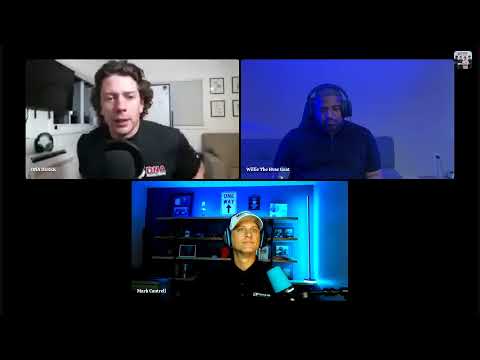
IAQ legend John Ellis of Dynamic Air Consulting joins Willie and Mark to walk through the complete service call and maintenance call life cycle, the real science behind UV lights, how to price maintenance agreements profitably, the Dustfree DF-16, and the torchbearer philosophy from a 45-year career.

Meet the Hosts & Guest

Who's on this episode

John Ellis headshot

Guest

John Ellis

Owner, Dynamic Air Consulting · New Mexico · 45 Years in the Trade

John Ellis is a 45-year HVAC veteran and one of the most recognized indoor air quality specialists in the country. He started at a supply house sweeping floors, worked his way through union shops, commercial kitchens, schools, hospitals, and surgery centers, and built SoCal Aerodynamics into one of California's premier performance contracting companies. He spent six years as a trainer with Daikin and six years coaching with New Flat Rate, and now runs Dynamic Air Consulting — doing ride-alongs, in-house IAQ training, and consulting on projects from Texas to Mumbai. He developed the Dustfree DF-16, a MERV 16 whole-system filtration product sold through True Tech Tools. He is an NCI-certified air balance technician, level one thermographer, and HERS rater, and has mentored dozens of technicians and business owners throughout his career.

Willie Ward headshot

Host

Willie Ward

Owner, GOAT Heating & Cooling · HVAC IS LIFE Founder · Charlotte, NC

Charlotte HVAC owner and founder of the HVAC IS LIFE community. Hosts the HVAC IS LIFE Podcast and co-hosts the weekly Live Q&A for contractors nationwide.

Mark Cantrell headshot

Host

Mark Cantrell

Owner, Upward Bound Media · HVAC Marketing · 15+ years experience

Residential and light commercial HVAC pro turned marketer. Runs Upward Bound Media, helping contractors win local search and turn their websites into a real pipeline.

Jump to section

  1. [3:47]John Ellis — 45 Years, Consulting, Ride-Alongs, and Mumbai
  2. [6:29]The Service Call and Maintenance Call Life Cycle
  3. [10:24]Maintenance Agreements — Know Your Numbers First
  4. [13:27]The Maintenance Call Process — Step by Step
  5. [17:15]The Golden Question Before You Leave the Room
  6. [21:08]Asking for Five-Star Reviews Without Leaving Three Stars on the Table
  7. [22:54]Selling a Maintenance Agreement After a Repair
  8. [26:11]The Buying Experience vs the Sales Process
  9. [30:25]The IAQ Ride-Along — Port Huron Michigan Story
  10. [35:13]Maintenance Frequency — Once or Twice a Year?
  11. [39:41]ECM Motors and the Duct System Misconception
  12. [43:52]The Dustfree DF-16 — Building the Best Mousetrap
  13. [49:01]Greatest Career Moments — From $1.4M Contract to Lung Transplant Patients
  14. [55:18]What Steered John Toward IAQ — Mentors and Thirst for Knowledge
  15. [58:31]Torchbearers vs Gatekeepers — Legacy Mode at 67
  16. [1:04:33]Where to Start in IAQ — Tools, Training, and Building Blocks
  17. [1:14:37]New Construction Duct Problems — 85% of All Systems
  18. [1:17:43]UV Lights — The Science, the Stool, and the Right Install
  19. [1:22:39]Advice to a Younger Self

John Ellis — 45 Years, Consulting, Ride-Alongs, and Mumbai

John Ellis is rarely home. When Mark found him for this episode, John had about 10 consulting projects running simultaneously — including a job in Mumbai working with a family on a VRV Daikin setup that required tracking down drawings from a third-party commercial dealer just to understand the return air layout. Domestically, Texas is keeping him particularly busy — Del Rio, San Antonio, Dallas, and Houston all active.

Beyond the IAQ consulting, John does ride-alongs that go much deeper than most contractors expect: he spends part of the day with the office team on scripting and call handling, then works with technicians on process, and then puts on a uniform and runs actual service and maintenance calls start to finish. His approach is built around his service call life cycle and maintenance call life cycle — a process framework he developed out of his years working with New Flat Rate and his own field experience running an HVAC company in California.

"I put on a uniform. We hit the pavement and go run service calls and maintenance calls and sales calls too. I come from the field so I love getting in the trucks with the guys."

John Ellis

Actionable Takeaway

If your technicians are learning process from someone who has never run a service call, it shows. Bring in a coach who has actually knocked on the door and done the work. The pattern recognition from field experience is not teachable from a slide deck.


The Service Call and Maintenance Call Life Cycle

John's life cycle framework is built around one principle: every step sets the table for the next step. The CSR schedules the call and tells the customer the technician will call ahead. The technician gives a courtesy call — "Hey, I'm on your schedule, I can be there in 20 minutes." That call sets an expectation. Showing up in 20 minutes meets it. The pattern of set-and-fulfill repeats from the first phone call through the knock on the door through the diagnostic through the options presentation.

John also coached his technicians to run calls start to finish during ride-alongs, letting them watch the whole process play out — from greeting and fact-finding through diagnosis, options, sale, review ask, and maintenance agreement pitch. The champion model matters here too: rather than having management preach process at the team, find the one tech who genuinely buys in, executes it well, and can model it for the others. Peers respond to peers.

"Every step of the process sets the table for the next step. I'm knocking on the door in 20 minutes. Expectations set. Expectations met."

John Ellis

Actionable Takeaway

Write your service call process from first customer contact through review ask. Each step should explicitly set up the next one. If any step leaves the customer uncertain about what happens next, that is the step costing you reviews, sales, and maintenance agreements.


Maintenance Agreements — Know Your Numbers First

The maintenance agreement conversation cannot happen honestly until you know what it actually costs to put a truck in a driveway for the first 45 minutes to an hour. Most contractors do not know that number. They do not know their billable rate, their break-even point, or the margin they need to be actually profitable. Some do not understand the difference between profit and revenue.

The industry habit has been to treat maintenance as a loss leader — write off the cost under marketing or bury it in a different budget line and hope the repairs and installs make up for it. John's position: it does not matter what budget line you sweep it under, you are either profitable or you are not. A maintenance department propped up by service and install revenue is a maintenance department secretly losing money. The 1,500-maintenance-agreement valuation argument has also changed — buyers are looking at profitability per department now, not just agreement volume.

"I don't care what rug you sweep it under. You're either profitable or you're not profitable. Most companies don't even know what it costs to put a truck in the driveway for the first hour."

John Ellis

Actionable Takeaway

Before your next pricing review, calculate your fully loaded cost to put a truck at a customer's address for the first 45 minutes — fuel, labor burden, insurance, vehicle cost, overhead allocation. If your maintenance price does not cover that number plus margin, you are subsidizing every agreement you sell.


The Maintenance Call Process — Step by Step

John walked through his complete maintenance call process in real time. The courtesy call comes first — the CSR has already set the expectation, the technician fulfills it by calling 20 minutes out. At the door: ask permission to come in, start greetings, immediately move to fact-finding. Where is the thermostat, the air handler, the condensing unit? How has everything been running? Any rooms too hot or too cold? Dust everywhere? High energy bills? Strange noises or smells?

The homeowner has been living with this system 24 hours a day, 365 days a year. They know more about its behavior than any technician who shows up once a year. If you do not ask, they do not know to tell you. Mark interrupted to make the point that most technicians skip this step entirely — and John agreed it is the most important step in the whole process. When you describe what you are about to do, keep it to three categories: mechanical, safety, performance. Not a 20-point bullet list. That is Japanese to most homeowners and it loses them.

"If you don't ask, they don't know to tell you. They live there 24/7 for the past 365 days. They know more about their system than you do."

John Ellis

Actionable Takeaway

Add these four questions to your opening on every maintenance call: Are there any rooms too hot or too cold? Have you noticed more dust lately? Have your energy bills been climbing? Any strange noises or smells? Write down the answers. What they tell you in the first two minutes will shape every option you present at the end of the call.

Don't miss the next one

Get every new Q&A in your inbox

Live episode alerts, key takeaways, and resources from each guest — every other Thursday.

No spam. Unsubscribe anytime.


The Golden Question Before You Leave the Room

Before John walks to the equipment, he always asks one final question: "Mrs. Smith, if I were to find something that is of concern to me that may cause a problem in the upcoming season, what would you like me to do about it?" That question requires an answer. And the answer — usually "just go fix it" — becomes the permission structure for everything that follows. He never does anything without asking. But by asking the golden question before he starts, he does not have to interrupt the call mid-diagnosis to have an awkward permission conversation.

And he asks one more question before heading out: is anyone in the household dealing with respiratory allergies or asthma? If yes — and only if yes — he mentions that he can deploy an indoor air quality monitor as part of the visit. It is framed as a complimentary service based on EPA and National Lung Association guidelines. That one question is the ethical entry point into the IAQ conversation without any smoke or mirrors.

"Mrs. Smith, if I were to find something that is of concern to me that may cause a problem in the upcoming season, what would you like me to do about it? That requires an answer."

John Ellis

Actionable Takeaway

Add the golden question to your pre-work checklist on every call. Ask it before you touch anything. The answer is your authorization. When you come back with your findings, you are not surprising them — you are fulfilling what they already told you they wanted.


Asking for Five-Star Reviews Without Leaving Three Stars on the Table

John's review ask process keeps three-star reviews off the table entirely. After finishing a repair: "If you enjoyed the service today, can you do me a favor? I'm going to send you a link. Can you give us a five-star review? And Mrs. Smith — if it's not going to be five stars, do me a favor: just call my boss and tell him what we can do to earn those five stars."

Willie called it out immediately — that script keeps the three-star off the table and is completely honest at the same time. You are not threatening the customer. You are genuinely inviting feedback through a channel that does not go public. The review ask has to happen before you leave. Once you drive away, the moment is gone unless the service was so exceptional they are already calling their friends. Most of the time it is not that, and that is fine — which is exactly why you ask before you leave.

"If it's not going to be five stars, do me a favor: just call my boss and tell him what we can do to earn those five stars. What did I just do? I kept the three stars off the table."

John Ellis

Actionable Takeaway

Write John's exact script on an index card and put it in your truck. Practice it out loud until it sounds like you — not like a script. The moment after you show the customer the system is running is the exact moment to say it. Not in the driveway. Not in the truck. At the unit, while the customer is still feeling good.


Selling a Maintenance Agreement After a Repair

The maintenance agreement pitch happens after the repair is done and the review ask is made. John's segue: "Did you know that every utility, every manufacturer, and the industry at large suggests having a professional in your home at least once or twice a year? I didn't even get a chance to tell you about our Comfy Cozy Maintenance Club." The name is deliberately warm and unthreatening.

He walks through mechanical, safety, and performance — the same three categories he described at the start of the visit. The conversation closes with a genuine offer and a genuine close on gratitude: "We know you have lots of choices for service providers. We really appreciate you choosing us." First-time customers and repeat customers who are not on a maintenance agreement both get this pitch. The frame is not sales. It is the buying experience — here is the menu, here is what makes sense for your situation, you choose.

"Did you know that literally every utility and manufacturer suggests you have a professional in your home at least once or twice a year? And I didn't even tell you about our Comfy Cozy Maintenance Club."

John Ellis

Actionable Takeaway

If you are not pitching a maintenance agreement after every repair call, you are leaving the easiest conversion in your business on the table. The customer just experienced your service. Their trust is at its highest point. That is the moment to offer them the relationship.


The Buying Experience vs the Sales Process

John made a distinction that reframes how to think about the entire customer interaction: the difference between selling to someone and facilitating a buying experience. His Walmart example — nobody corners you in the coffee maker aisle and tries to convince you to buy the most expensive one. They lay out the options and let you choose. His restaurant example is even sharper: the waiter hands you a menu. They might mention a special. They absolutely do not try to hard sell you on the lobster. They ask what you want and go get it.

The menu model is what John applies to HVAC options. He presents five options and actually tells the customer which one is most appropriate for their situation — sometimes explicitly saying the top option is not right for them and narrowing to two or three that actually fit. That honesty is the sales move. Listening is the sales skill. When you genuinely hear what a customer tells you about their home, their budget, and their concerns, the right option presents itself and the customer picks it.

"What if you step back a little bit and looked at the buying experience? Because that's the difference between sales and experience."

John Ellis

Actionable Takeaway

On your next install call, present at least three options but guide the customer toward one or two that genuinely fit their situation. Say out loud which option you would choose if it were your home and why. That honesty converts faster and with less friction than any close you have ever practiced.


The IAQ Ride-Along — Port Huron Michigan Story

John told the story of a ride-along that illustrated something even more important than IAQ: the need to be heard. A company in Port Huron, Michigan had completed his full IEQ training. They had an acute IAQ case — a man who had worked in oil refineries, was now compromised and housebound, and felt worse inside than outside. The technician had done the intake questionnaire over the phone — with the husband only.

When John and the team sat down at the table, the wife raised her hand and asked if anyone cared how she felt. She had been dismissed from the entire intake process. She said she had thought her husband was imagining it — until she noticed she had not been able to sing at church recently. That moment changed the whole scope of the call. The questionnaire should have been sent to the household to fill out together, not rushed over the phone with one person.

"She raised her hand and said, 'Does anybody care how I feel?' She just wanted to be heard."

John Ellis

Actionable Takeaway

Send your IAQ questionnaire to the household before the appointment and ask them to complete it together at their own pace. Do not fill it out over the phone with one person while the other is in the next room. The second person in the house often has the symptom that changes the entire scope.


Maintenance Frequency — Once or Twice a Year?

The once-versus-twice-a-year question is geographically specific. In markets with communicating thermostats, smart monitoring devices like Haven IAQ, or MeasureQuick commissioning data, a contractor can keep a meaningful finger on the pulse between visits. In those markets, once a year may be defensible for some equipment types.

But in the northern states — Indiana, Michigan, Buffalo, Minnesota — you typically have dehumidification in summer, humidification in winter, and some kind of fresh air component. All of those need to be maintained and switched over seasonally. Once a year does not serve that equipment or those customers. Mark added that in Oklahoma he recommends twice a year primarily because of the volume of gas furnaces — safety matters before every heating season. Heat pumps in warmer climates largely clean themselves during defrost cycles, which changes the math somewhat. The honest answer is it depends — but twice a year is the safer default for most markets and most equipment.

"In the north — Indiana, Michigan, Buffalo, Minnesota — they do dehumidification, humidification, and fresh air. Those all have to be maintained and switched over seasonally. Once a year won't work."

John Ellis

Actionable Takeaway

If you are still doing one maintenance per year on every system regardless of equipment type or geography, review your contract structure. Systems with humidifiers, ERVs, dehumidifiers, or communicating components have seasonal changeover requirements that a single annual visit will miss.


ECM Motors and the Duct System Misconception

When ECM motors came into residential HVAC, contractors developed a dangerous assumption: that the motor would compensate for an undersized duct system. It will ramp up to overcome a wet coil. It will ramp up within reason to compensate for a loading filter. It will not fix a fundamentally undersized return or a scatter-box distribution system. What happened as a result was predictable — fourth motor changes, multiple compressor failures, systems that should have lasted 15 years burning out in five because the ECM was fighting a duct system every single day.

John worked six years for Daikin. Their tech support data was unambiguous: the majority of warranty and support calls linked back to airflow. Not faulty parts. Airflow. Willie added that the same pattern plays out on inverter systems now — more sensitive commissioning requirements, even less tolerance for duct deficiency, and the same contractors skipping the static pressure check because they assume the equipment will figure it out.

"When we started seeing ECM motors, contractors had this weird idea that an ECM motor will take care of a bad duct system. No, no, no. It'll ramp up within reason. Anything past that, no, it doesn't."

John Ellis

Actionable Takeaway

Before your next ECM or inverter install, pull static pressure at the unit and document it. If the system is going to fight undersized returns every time it runs, that is a conversation to have with the homeowner now — not after the second motor change in year four.


The Dustfree DF-16 — Building the Best Mousetrap

John spent two years working with the engineers at Dustfree to develop the DF-16, a MERV 16 whole-system filtration product. He is direct about the philosophy: he did not invent the mousetrap, he built the best one. Most MERV 16 filters get their rating based on the filter alone going into a cabinet. Once installed, the seal is loose enough that air bypasses the media and the real-world efficiency drops significantly.

The DF-16 was tested to ASHRAE 52.2 MERV 16 as a complete system — filter and housing together — because that is the only test that reflects what actually happens in the field. The filter media came from Europe because no US manufacturer could meet John's five filtration method requirements. It gets pleated and framed in Texas. Sold through True Tech Tools. Real-world static pressure numbers: 0.18 on a five-ton, 0.14 on a three-ton. Three-year filter change interval in a typical household. John has had instances with a predecessor product where customers got four years. If installed correctly with tight ductwork and a tight system, John guarantees you will never need to clean the blower, the coil, the duct, or the cabinet for the life of the system.

"I didn't invent the mousetrap. I just built the best one. Most manufacturers test the filter once it goes into the cabinet and it's loose as a goose — it's no longer a MERV 16 after that."

John Ellis

Actionable Takeaway

When recommending high-efficiency filtration, ask whether the product has been tested as a complete system or just as a standalone filter. The difference in real-world performance is significant. If the housing seal is poor, the MERV rating on the box is marketing, not protection.


Greatest Career Moments — From $1.4M Contract to Lung Transplant Patients

John beat United Technologies — Carrier — for a $1.4 million pilot study contract from the South Coast Air Quality Management District on indoor air quality for schools and high-performance filtration. Before the award, he had to sit in front of a six-person panel that included a PhD in atmospheric science, legal, marketing, and others — and make the case for why they should put $1.4 million in his bank account instead of one of the biggest HVAC manufacturers in the world. He got the contract.

But when asked what his most rewarding work has been, John did not go to that moment. He went to the families. His IAQ clients in California came to him with cystic fibrosis, COPD, immunology and oncology conditions, Lyme disease, valley fever, debilitating asthma, and six lung transplant recipients. His average ticket in California was between $40,000 and $80,000 because he was fixing the whole house. He had referral relationships with UCLA Medical Center, USC Medical Center, LA Children's Hospital, and prominent immunologists and allergists in the Beverly Hills area. When a doctor prescribes John Ellis to a patient — and those patients later go off medications, reduce treatments, and gain lung function — that is what 45 years of building blocks in HVAC looks like at its fullest expression.

"The very decisions that I help them make — their life or their quality of life depends on those decisions. This isn't smoke and mirrors. This is real science."

John Ellis

Actionable Takeaway

The IAQ lane exists, it pays well, and most markets have almost nobody doing it ethically and at a high level. If you are willing to invest in the training, the tools, and the relationships with the medical community in your area, you are building something most of your competitors will never touch.


What Steered John Toward IAQ — Mentors and Thirst for Knowledge

John started at a supply house 45 years ago sweeping floors and doing shipping and receiving. The thing that bent his career in the direction it went was not one training or one job. It was mentors — personal, spiritual, and professional — and a thirst for knowledge that once activated never stopped. His mentor Jean was a respiratory pharmacist by trade who had shifted into environmental work. Because Jean held a PhD, he could talk doctor talk, and that opened doors to conversations with immunologists and oncologists that John alone could not have had. They built that bridge together.

The training piece changed everything once John found it. He took every class through NATE that was ever offered. He found NCI. He flew to San Jose for his first commercial air balance certification and came back a different contractor. He had been doing supply house product training once in a while before that. After NCI, he was doing air balances as often as some companies do service calls.

"The biggest determining factor on what steered my career was having rock solid mentors — personal, spiritual, and professional. And once I discovered training, I was a sponge."

John Ellis

Actionable Takeaway

Find your Jean. Find the person outside your exact trade whose knowledge opens a door your credentials alone cannot. Respiratory pharmacists, immunologists, building scientists, energy auditors — the relationships that cross disciplines are where IAQ differentiation gets built.


Torchbearers vs Gatekeepers — Legacy Mode at 67

John is 67 years old and describes himself as being in legacy mode. When he was an apprentice, he ran into gatekeepers — experienced technicians who kept him on grunt work and would not let him near what they were doing because they felt threatened. He will not do that. A torchbearer shines the light for the people coming behind them and then hands the torch to them. He currently mentors 12 to 15 people personally, spiritually, and professionally.

The organizations carrying the torchbearer ethos that he named specifically: the Better HVAC Alliance, NCI, TEC, MeasureQuick, HVAC School out of Florida, and Haven IAQ. The principle is rising tides lift all ships. Mark connected this directly to why Willie started the HVAC IS LIFE group — the same premise, the same message. You have got to pass the knowledge on. Stop holding it so close that you are the only one who has it. Knowledge means nothing if it dies with you.

"A torchbearer is someone who shines the light for people to come behind them and then hands that torch to them. I was a mentee. Now I'm a mentor. I'm in legacy mode."

John Ellis

Actionable Takeaway

Identify one person in your orbit right now who is hungry to learn what you know. Commit to one hour per month of deliberate knowledge transfer — not supervision, not oversight, but actual teaching. That is how the trade improves and how your own legacy outlasts you.


Where to Start in IAQ — Tools, Training, and Building Blocks

Mark asked the loaded question: for a contractor with two techs who wants to take IAQ seriously without getting overwhelmed, where do they start? John's framework: it has to be top-down culture first. If the owner and management do not believe in it, the techs who want to learn will burn out trying to fight the tide.

Given that buy-in exists, the training path starts with NATE, then NCI — specifically their air balance and system performance courses. HVAC School (Brian Orr's organization) is phenomenal. The Indoor Air Quality Association is worth getting involved with. For tools, the answer is not to buy everything at once. Start with a manometer — everyone should have one. Then a combustion analyzer — combustion safety is always first in any IAQ context. Then a simple carbon dioxide monitor from Airnet to start learning ventilation as a proxy. Then simple VOC readers from True Tech Tools or UEI to start understanding what those readings mean and where they come from.

"It has to be top-down culture. Your boss and your management have to buy in and believe in it. I've had guys calling me ready to leave because management didn't believe and they just wanted to learn."

John Ellis

Actionable Takeaway

If you want to move into IAQ, get management to say yes first — then buy a manometer and take your first NCI class. Start with one building block. John built 45 years worth. You build the next one.


New Construction Duct Problems — 85% of All Systems

NCI has published data showing that greater than 85% of all systems installed in the United States do not have enough return air. John called that inventory. Willie called it inventory every single time he walks into a Charlotte new construction home — scatter box to scatter box, no straight path, rooms that never hit setpoint, and homeowners who have just gotten used to it because they do not know what right feels like. Mark said the number feels low — in Oklahoma he has never not found an undersized return on a new construction system.

John explained the origin: he worked for the largest tract HVAC contractor in California, going up one side of a street and down the other doing 300 houses at a time. People were moving into the first house while they were still installing the last one. Low bid wins the contract. Before lunch or after lunch determines the craftsmanship. That is the baseline that contractors are inheriting today on every replacement job.

"Greater than 85% of all systems installed — not enough return air. NCI has the data. That's inventory, baby. Every one of those houses was built the same by the low bid."

John Ellis

Actionable Takeaway

The next time you pull a replacement proposal, measure the return side. If you are inheriting an undersized return — which statistically you almost certainly are — put the deficiency in writing in the proposal, offer a return improvement option, and get the customer's decision in writing if they decline. You do not want to own that airflow complaint after the equipment goes in.


UV Lights — The Science, the Stool, and the Right Install

UV lights work. John endorses them — with conditions. The science runs on a three-legged stool: intensity of the UV spectrum, distance from the surface being treated, and dwell time — the amount of time a given microbial is exposed. Remove any one of those three legs and efficacy drops toward zero. He has seen UV lights installed in condensing units. He has seen them mounted on top of the A-coil pointing at the sheet metal cap. That sheet metal is the cleanest surface in the system. It does nothing.

UV treats surfaces, not air. To treat an A-coil correctly, the light needs to be 12 to 15 inches from the surface. Because air migrates to the outside of the A due to pressure difference as the coil gets wet, you need coverage on both outside faces and through the middle. His triple-safe approach: one in the center of the A and one on each outside. Four bulbs to truly follow the rulebook. But — and this is the point — if you have tight ductwork, tight filtration, and no food source reaching the coil, microbial growth loses one leg of its own three-legged stool. Keep the food out with filtration and you may not need UV at all.

"It's a three-legged stool — intensity, distance, and dwell time. If you don't have those three in place, your efficacy drops like a rock. And guys are sticking them on top of the A-coil pointing at sheet metal."

John Ellis

Actionable Takeaway

Before your next UV light install, identify the surface you are trying to treat and measure the distance from the bulb to that surface. If it is more than 15 inches, reposition or add bulbs. If it is aimed at anything other than the coil face, it is not treating the coil. Sell the science, not the bulb.


Advice to a Younger Self

Willie's standard question. John's answer had two parts. The first was personal and direct: get sober. John is 25 years sober. When he was younger he was running and gunning — hot in the field, out with friends, thinking everything was under control until it was not. He referenced the Mercy Me song "Dear Younger Me" and said if he could go back, sobriety would be the first change.

The second part was professional: discover training sooner. He was probably 10 to 12 years into his career before he found real training — not supply house product training, but NCI and NATE and the organizations that changed everything. Once he found it, he became a sponge. He could not get enough. He looks back and sees 10 to 12 years of building blocks he could have had earlier. Mark closed the loop: even at 45 years in, John is still learning. He learned something the day of this episode working on the Mumbai project. In HVAC, you are lying to yourself if you say you know everything.

"I wish I would have discovered training sooner. I was probably 10 or 12 years into my career. When I started, the light bulbs went on and I was like a sponge. I just wanted more."

John Ellis

Actionable Takeaway

If you are more than five years into this trade and have not sat in an NCI class or an HVAC School session or a proper commissioning training, that is the single highest-leverage thing you can do this year. Not a new tool. Not a new truck. Training.

Featured Quotes

"Every step of the process sets the table for the next step. Expectations set. Expectations met."

John Ellis

"If you don't ask, they don't know to tell you. They live there 24/7. They know more about their system than you do."

John Ellis

"If it's not going to be five stars, do me a favor: call my boss and tell him what we can do to earn those five stars."

John Ellis

"What if you step back and looked at the buying experience? That's the difference between sales and experience."

John Ellis

"I didn't invent the mousetrap. I just built the best one."

John Ellis

"A torchbearer shines the light for people to come behind them and then hands that torch to them."

John Ellis

"The very decisions I help them make — their life or their quality of life depends on those decisions."

John Ellis

"I was a mentee. Now I'm a mentor. I'm in legacy mode."

John Ellis

Questions Answered

Click a timestamp to jump to that moment on YouTube.

Featured Resources & Sponsorship

Tools, offers, and partners from this episode

Episode Sponsor

Free consultation + 10% off all services for HVAC IS LIFE listeners

Upward Bound Media

HVAC-specialized SEO, websites, and digital marketing built by people who actually know the trade.

Tools & products mentioned

  • Filtration

    Dustfree DF-16

    MERV 16 whole-system filtration developed by John Ellis. Tested to ASHRAE 52.2 MERV 16 as a complete system. Three-year filter change interval. Available through True Tech Tools.

  • Organization

    NCI (National Comfort Institute)

    Air balance, system performance, and high-performance contracting training. John's first NCI class changed his business. The starting point for contractors moving into performance work.

  • Training

    HVAC School

    Bryan Orr's training organization. John calls it phenomenal. Free content and structured courses for technicians at every level.

  • Software

    MeasureQuick

    Commissioning and system performance software. Keeps a pulse on systems between maintenance visits.

  • Monitoring

    Haven IAQ

    Indoor air quality monitoring device for ongoing system oversight. Enables longer intervals between maintenance when paired with good commissioning data.

  • Tool

    Combustion Analyzer

    John's recommended second tool after a manometer for any contractor entering IAQ work. Combustion safety is always first. Look at Bacharach or UEI models.

  • Monitoring

    Airnet CO2 Monitor

    Simple carbon dioxide monitor John recommends to start using CO2 as a proxy for ventilation quality. Available through True Tech Tools.

  • Organization

    Better HVAC Alliance

    Rising-tides coalition — NCI, TEC, MeasureQuick, HVAC School, Haven IAQ — focused on industry improvement through knowledge sharing rather than gatekeeping.

  • Consulting

    Dynamic Air Consulting (John Ellis)

    Ride-alongs, in-house 16-hour IAQ training workshops, and consulting. John brings the training to your company.

Want to reach HVAC pros?

Sponsor a future episode of HVAC IS LIFE.

Become a sponsor

Guest Resources

John Ellis

Owner, Dynamic Air Consulting · New Mexico · 45 Years in the Trade

John Ellis is a 45-year HVAC veteran and one of the most recognized indoor air quality specialists in the country. He started at a supply house sweeping floors, worked his way through union shops, commercial kitchens, schools, hospitals, and surgery centers, and built SoCal Aerodynamics into one of California's premier performance contracting companies. He spent six years as a trainer with Daikin and six years coaching with New Flat Rate, and now runs Dynamic Air Consulting — doing ride-alongs, in-house IAQ training, and consulting on projects from Texas to Mumbai. He developed the Dustfree DF-16, a MERV 16 whole-system filtration product sold through True Tech Tools. He is an NCI-certified air balance technician, level one thermographer, and HERS rater, and has mentored dozens of technicians and business owners throughout his career.

Topics

indoor air quality HVACUV lights scienceMERV 16 filtrationDustfree DF-16True Tech Toolsservice call life cyclemaintenance call processmaintenance agreement pricinggolden question HVACfive star review scriptbuying experienceoptions presentation HVACIAQ ride alongcombustion analyzer HVACmanometer HVACCO2 monitor HVACECM motor duct systemairflow is kingNCI trainingHVAC SchoolMeasureQuickHaven IAQBetter HVAC Alliancenew construction duct problemsundersized return airscatter box ductworkHVAC coachingHVAC mentorshiptorchbearer philosophygatekeeping HVACJohn EllisDynamic Air ConsultingWillie WardMark CantrellUpward Bound Media

Subscribe for more

Never miss a live Q&A.

HVAC IS LIFE airs every other Thursday. Hit subscribe on YouTube and join the email list for episode alerts and show notes.

Email alerts

Get the next episode in your inbox.

No spam. Unsubscribe anytime.

Related Episodes

More Q&As from the crew.

Community

Community (0)

Sort:

Join the conversation.

Create a free account or sign in to comment.

Loading comments…