July 9, 2026 · Live Q&A 1h 37m
All-Electric HVAC, Reddit Leads & AI Search with Derek Aarstad of DNA Heating and Cooling
Derek Aarstad of DNA Heating and Cooling on getting 3-4 clients a month from Reddit, showing up in AI search, going all-electric, combustion analysis, and building a boutique HVAC shop that lasts.
Meet the Hosts & Guest
Who's on this episode
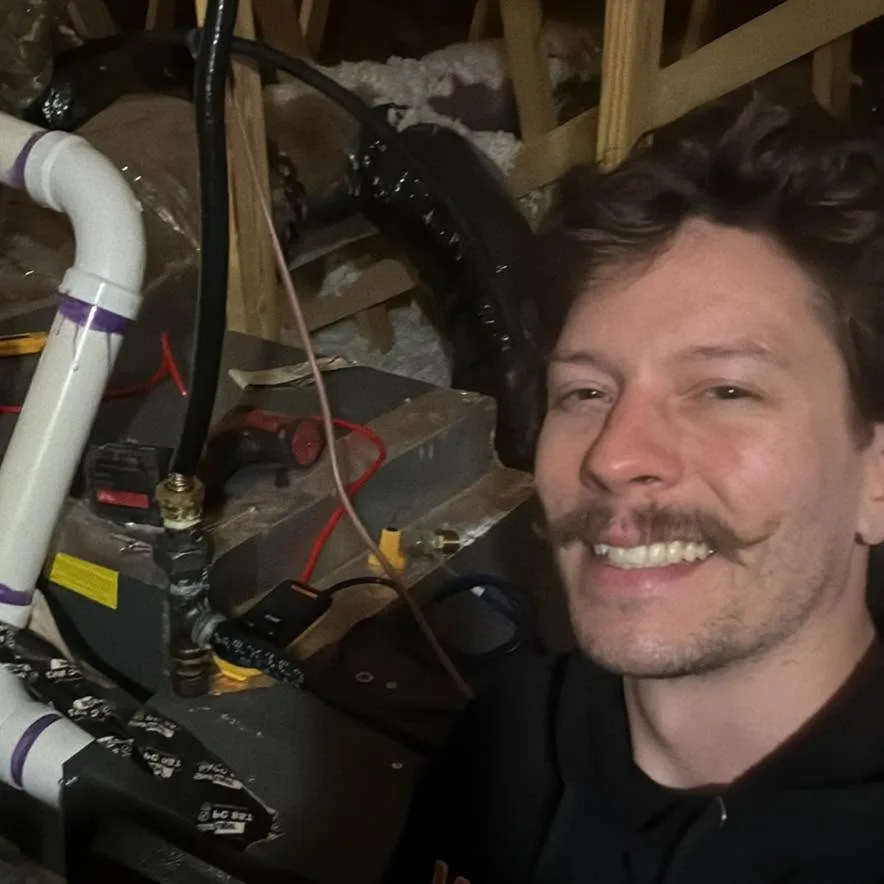
Guest
Owner, DNA Heating and Cooling · Richmond, VA · 16+ years in the trade · Building science & all-electric boutique
Derek Aarstad owns DNA Heating and Cooling in Richmond, Virginia - a deliberately small, all-electric, building-science-driven HVAC shop. After 16+ years in the trade, Derek made the call to stop chasing volume and build a boutique operation focused on the highest-quality install for every client. He proposes a heat pump for every gas furnace he sees, refuses to install new combustion equipment, and runs combustion analysis on every existing furnace he touches. Derek is active in the National Comfort Institute (NCI), Building Performance Institute (BPI), Rewire America, and the Better HVAC electrification group. He gets 3-4 clients a month from Reddit organically and has started landing jobs from Gemini, ChatGPT, Claude, and Perplexity - all without paid ads.
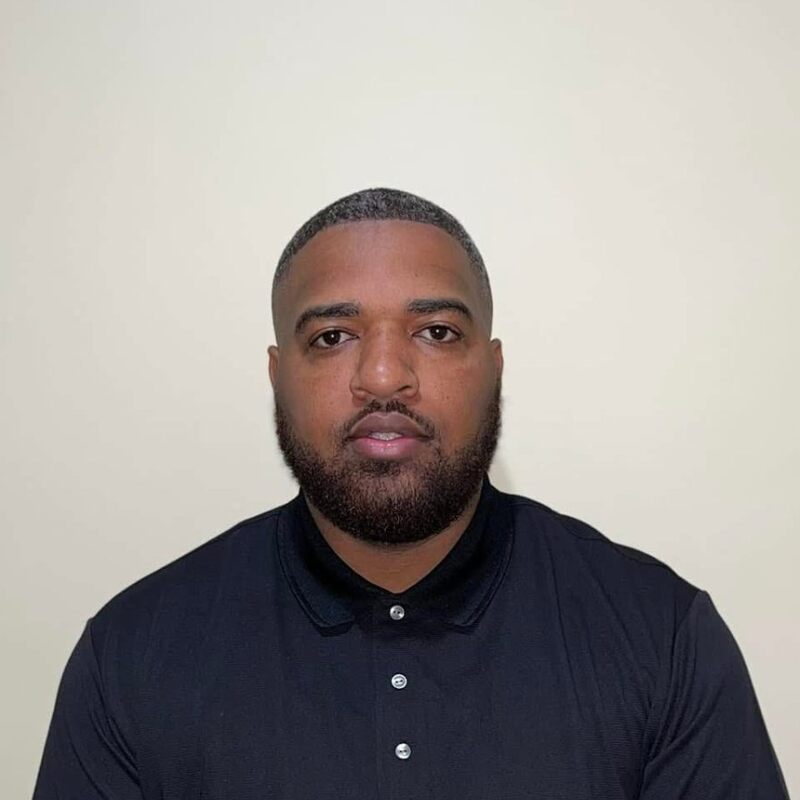
Charlotte HVAC owner and founder of the HVAC IS LIFE community. Hosts the HVAC IS LIFE Podcast and co-hosts the weekly Live Q&A for contractors nationwide.
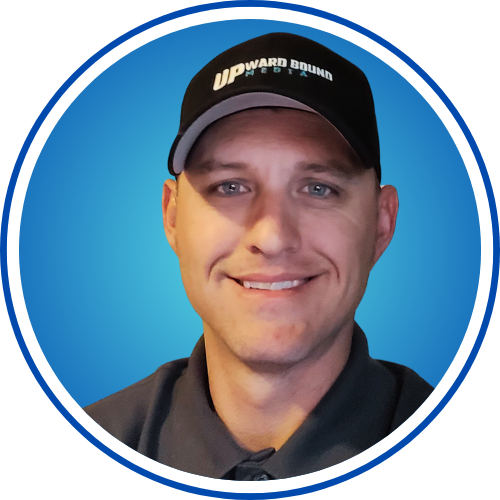
Residential and light commercial HVAC pro turned marketer. Runs Upward Bound Media, helping contractors win local search and turn their websites into a real pipeline.
Jump to section
- How Derek Gets Leads From Reddit (Doing Nothing)
- Showing Up in AI Search: Gemini, ChatGPT, Claude, Perplexity
- Why All-Electric Is the Whole Identity
- Combustion Analysis and Why It Matters
- The Boutique Model: Quality Over Volume
- Handling Price Shoppers & the Capacitor Objection
- Picking a Brand, Distributors & Callbacks
- Tools of the Trade: CRM, Warranties & Gear
- Burnout, Mental Health & Running a Business That Runs Without You
How Derek Gets Leads From Reddit (Doing Nothing)
The moment that stopped the whole room: Derek estimates three to four of his clients each month come straight from Reddit - and he doesn't post, comment, or manage any of it. He lets it grow organically while homeowners in local HVAC subreddits talk about their experiences with him.
What makes these leads different is how prepared they arrive. By the time a Reddit client calls, they've read the threads, checked his Google reviews, and looked at his website. They already know what they want and they're looking to confirm he checks the boxes. Derek describes the Reddit client as predictable in the best way - if it says Reddit, he knows it's going to be a good experience for both sides, because the homeowner did their homework first.
The mechanism underneath it is reputation depth. When you consistently give people something worth talking about, they talk - and in a local subreddit, one good story compounds fast across a community that's all in the same market. Derek's take is that this is the same dynamic that makes local Facebook groups powerful: a single strong recommendation inside a tight local community can travel a long way.
Actionable Takeaway
You don't have to be on Reddit to get leads from Reddit. Do work worth talking about, and let the community do the marketing.
Showing Up in AI Search: Gemini, ChatGPT, Claude, Perplexity
Here's where it gets forward-looking. Derek noticed Gemini started surfacing his business - and the likely reason is Reddit, since Gemini leans on Reddit content. He's also landed jobs traced back to ChatGPT, Claude, and Perplexity. All of these tools pull from the same well of community discussion and reviews.
Mark connected the dots on-air: Reddit has become a major data source for AI systems, so having your name circulating across Reddit threads and local Facebook groups isn't just social proof anymore - it's feeding the engines people now use to search. Willie added the community angle from his own market: when someone posts an HVAC question in a local group, he gets tagged by past customers who vouch for him, and that same activity ends up reinforcing his visibility everywhere else.
The practical instruction for owners: you don't control the algorithm, but you control the inputs. Do work worth talking about, accumulate real reviews, and get named in the local communities where your customers already hang out. That's what compounds into both word-of-mouth and AI visibility.
Actionable Takeaway
AI search rewards the same reputation depth as word-of-mouth - the inputs are Reddit threads, local Facebook mentions, and real reviews.
Why All-Electric Is the Whole Identity
DNA Heating and Cooling is all-electric, and Derek doesn't soften it. He proposes a heat pump replacement for every gas furnace he encounters, and he's upfront that he doesn't want combustion in your house. His website makes the position clear so nobody's surprised - you know exactly what you're dealing with before he shows up. He's also active in electrification networking through the Better HVAC group and Rewire America, which he credits with sending him solid jobs.
A few things make this stance practical rather than preachy in his climate. His flagship cold-climate unit (he cites the Midea Evox G3) holds 100% capacity down to 5°F outdoor ambient in his zone, where winter averages sit around 20°F - enough, in his experience, that it doesn't need a backup heat kit. His entry-level cold-climate models still ship with a heat kit. He'll option systems at 120V or 240V depending on the home and client. If a customer refuses to let go of gas, the only combustion product he's willing to put back is a Navien tankless hydronic setup, which he considers far safer on the carbon-monoxide and corrosion front. And he'll still service, repair, and maintain existing combustion equipment - he just won't install new gas.
Then there's the aspirational end of the catalog: water-source heat pumps. Derek is genuinely excited about above-ground water-source systems (he mentions Space Pack's version and an Italian-made product), describing units that modulate and can heat and cool separate rooms. The catch is cost - he pegs his own cost on a four-ton multi-head water-source system around $16,000, so it takes a special client. His dream job is the one-of-a-kind historic home where he can rip out an old radiator and drop in something outlandishly capable without touching the protected exterior.
Actionable Takeaway
Deciding what you won't install can be more powerful marketing than trying to sell everything.
Combustion Analysis and Why It Matters
If all-electric is the philosophy, combustion analysis is the safety half of it. Derek credits an NCI class taught by David Richardson as one of the biggest gifts of his career - the message being that you shouldn't enter a home with combustion appliances and skip testing them.
His first call after committing to that practice made the point permanently. A homeowner - a friend of his - had a DIY Mr. Cool install cut straight out of the back of the furnace. Derek put his analyzer in and hit 5,000 parts per million right out of the gate, on a system that hadn't even been run yet. He shut it down on the spot. That was the moment he decided he'd never skip combustion testing again.
He's since upgraded to a Novo analyzer with a cracked-heat-exchanger test mode (previously running a CAT 85), and his observation from the field is sobering: 90%+ of the homes he visits have a furnace ten years or older that never had a combustion analysis performed from the day it was installed. Mark backed this up from the other side - in 15 years in the field, he checked for carbon monoxide but never ran a true combustion analysis, and hadn't even heard the term until later.
Actionable Takeaway
Combustion analysis is both a safety obligation and a genuine differentiator, because so few contractors are actually doing it.
Don't miss the next one
Get every new Q&A in your inbox
Live episode alerts, key takeaways, and resources from each guest - every other Thursday.
The Boutique Model: Quality Over Volume
Derek uses the word boutique deliberately. To him it means a franchise-level consistency of experience - same red-carpet treatment for every client regardless of the home or situation. He arrives with a plan, and the moment he's inside he's reading the environment: thermostat placement, filters, return grills, ready to educate once he's learned the space.
That identity got sharpened at NCI. Flying to Texas for training, he became a member by day two, and for the first time felt like he'd found his people - the room helped him realize he was a high-performance contractor, not just another install shop. He walked out refusing to present himself as anything less.
Staying small is a choice he made the hard way. Derek admits he once had a vision to grow a five-to-ten-person crew and got aggressive about it - and it cost him. He estimates he lost close to $80,000 employing people who didn't take it seriously, some of whom later came after him for unemployment or injury claims. One hire went through a ceiling in his first week after clear instructions, then blamed Derek. The lesson landed: he'd rather stay lean and excellent than big and bleeding.
Willie and Mark pushed the healthy counterpoint - ideally you grow enough that taking a day off doesn't hit the bottom line. On new construction, the panel was unanimous: it's a race to the bottom with no margin, worth it only on custom homes where a builder is putting serious money into the system.
Actionable Takeaway
Growth isn't the only success metric. Staying small on purpose is a valid strategy - as long as the business can still run when you take a day off.
Handling Price Shoppers & the Capacitor Objection
A chat question about losing a bid to a competitor's 10-year labor warranty opened this one up. The panel's answer: get your own. Derek offers either 10-year or 12-year parts-and-labor on everything, and his framing is that price shopping is really a symptom - it means the value of your business didn't get communicated. When a homeowner thinks every company is the same, that's on the presentation, not the customer.
His best illustration is the capacitor objection. A Reddit client's wife had done her homework and came loaded for bear: capacitors are only $30 online, so what's the labor charge? Derek's rebuttal reframed the part entirely - what she researched was the standard, Chinese-made capacitor with a one-year warranty at best, while what he installs carries a five-year replacement warranty, higher voltage capability, and better system performance. She told him to put it in.
For the record, Derek runs Amrad capacitors, and his reasoning is practical as much as quality-driven: he's not carrying 50 capacitors on the van, especially now that he's expected to haul nine different cans of refrigerant. On warranties, he's evolved from one-year labor to three-year to a non-negotiable plan he now pays for himself and doesn't even bill to the client - using JB Warranties for non-Champion products and in-house plans for Champion/Bosch equipment.
Actionable Takeaway
Price shopping is a value-communication failure. Fix the presentation - and own the labor warranty - and the objection quietly disappears.
Picking a Brand, Distributors & Callbacks
Asked for his favorite equipment brand, Derek gave the honest, non-brand-loyal answer. He started on Goodman and doesn't hate the product - his view is that it became a victim of its own accessibility, and that in his area (post-Daikin) it's gotten expensive. He moved to Rheem/Ruud, then had a rough run with Toshiba's Platinum series, reporting coils that looked aged ten years within six months and three systems he had to warranty before Toshiba exited the 410A line. After shaking hands with the Midea team at the AHR Expo, he became a fan, describing their newer products as genuinely service-minded and serviceable.
But the panel's real conclusion - echoing a sharp chat comment from a viewer named John - is that the best brand is properly designed, installed, commissioned, and maintained. Derek put it plainly: he's not married to any brand and would switch tomorrow if it meant treating his clients and himself better. Willie and Mark reinforced that the best brand is effectively geographic - if your distributor is great, the brand matters less; if your distributor is terrible, no badge saves you.
On the manufacturer side, Derek was blunt about Carrier and Trane in his market - citing poor communication, expensive OEM parts, and painful warranty processes. Two things actually separate good shops from bad ones: install by the book (quality is non-negotiable), and own your callbacks - shops that vanish for two or three weeks on a warranty claim are the ones that lose trust.
Actionable Takeaway
The best brand is your distributor and your install quality. Everything else is marketing.
Tools of the Trade: CRM, Warranties & Gear
CRM: Derek has run House Call Pro since day one and calls it one of his best moves. He's clear he doesn't want to grow into Service Titan territory - partly on values, partly on cost (he pegs Titan at roughly 10x House Call Pro's price), and partly because he's heard how hard it is to leave once the hooks are in. The panel's shared frustration: the constant flood of DMs and emails from people pitching a new game-changing HVAC CRM or AI answering service.
Warranties: JB Warranties for non-Champion products; Champion/Bosch in-house plans for their equipment, which Derek says are aggressively priced and honored well. He praised JB's turnaround on a unit swap - replacement air handler fast, client down only a couple hours, paid within about a week.
Field gear: A Novo combustion analyzer (with cracked-heat-exchanger test mode) that ships in a heavy-duty foam-cutout case, Amrad capacitors, and MeasureQuick for keeping his apprentice dialed in. He keeps a system so anyone behind him can duplicate the work - open line of communication, FaceTime and inspection-camera check-ins, and training videos sent to keep techs sharp without making them feel judged.
Actionable Takeaway
Standardize your gear and your CRM so anyone behind you can duplicate the work - it's what makes a small shop scalable without adding people.
Burnout, Mental Health & Running a Business That Runs Without You
The most human stretch of the episode - and worth reading if you're carrying the weight of a one-person shop.
A year before this taping, Derek broke his foot at the end of June. As a one-man operation, he panicked about losing clients and the business grinding to a halt. Instead, that July became one of his strongest months ever - without him setting foot in the field. It was the eye-opener that proved the business could stand on its support system, and it reset how he thinks about his role.
He was candid about the mental-health side. Coming from an anti-medicine mindset, Derek had to get vulnerable and accept that he needed help for a stretch - using it as a temporary tool to stop stacking every problem on top of each other until it imploded. He credits local men's groups (he'd drive one to two hours to sit with like-minded people) and a broader principle the whole panel kept returning to: you become the sum of the people around you, so surround yourself with people who build you up, not antagonizers who drain you. Or, as the recurring line in HVAC IS LIFE goes - go where you're celebrated, not where you're tolerated.
Mark named the business stakes directly: when you're burned out and skip your own maintenance, it spills into every customer interaction - you get short, you snap over something small, and you start burning the business you broke yourself to build.
Actionable Takeaway
Build the business so it runs without you - then actually step away. Your mental health is a business asset.
Questions Answered
Click a timestamp to jump to that moment on YouTube.
Featured Resources & Sponsorship
Tools, offers, and partners from this episode
Tools & products mentioned
Business
Derek's all-electric, building-science HVAC shop in Richmond, VA.
Training
National Comfort Institute (NCI)
Training and building-science community; Derek credits their combustion analysis class with David Richardson as career-defining.
Certification
Building Performance Institute (BPI)
Certifications for building-performance and building-science contractors.
Community
Electrification networking community that sends Derek qualified all-electric jobs.
Software
Diagnostics app Derek uses to keep his apprentice dialed in on airflow, refrigerant, and system performance.
Warranty
Extended labor warranty coverage Derek uses for non-Champion products.
Book
Homeless to Billionaire by Andrés Pira
Book Derek recommends for mindset and business philosophy.
Guest offers & downloads
From Derek Aarstad
Want to reach HVAC pros?
Sponsor a future episode of HVAC IS LIFE.
Guest Resources
Derek Aarstad
Owner, DNA Heating and Cooling · Richmond, VA · 16+ years in the trade · Building science & all-electric boutique
Derek Aarstad owns DNA Heating and Cooling in Richmond, Virginia - a deliberately small, all-electric, building-science-driven HVAC shop. After 16+ years in the trade, Derek made the call to stop chasing volume and build a boutique operation focused on the highest-quality install for every client. He proposes a heat pump for every gas furnace he sees, refuses to install new combustion equipment, and runs combustion analysis on every existing furnace he touches. Derek is active in the National Comfort Institute (NCI), Building Performance Institute (BPI), Rewire America, and the Better HVAC electrification group. He gets 3-4 clients a month from Reddit organically and has started landing jobs from Gemini, ChatGPT, Claude, and Perplexity - all without paid ads.
Topics
Subscribe for more
Never miss a live Q&A.
HVAC IS LIFE airs every other Thursday. Hit subscribe on YouTube and join the email list for episode alerts and show notes.
Email alerts
Get the next episode in your inbox.
Related Episodes
More Q&As from the crew.

September 3, 2026
Own Your Own HVAC Warranty Company: How Reinsurance Really Works
Tim Byrd of Warranty-RE explains how HVAC contractors can own their own warranty and reinsurance company - stop paying third parties, keep the reserves, cut taxes, and clear contingent liability before a sale.

August 6, 2026
HVAC IS LIFE Is Now a Free Platform for Contractors & Techs: Vetted Directory, Job Board & Training
Mark and Willie unveil the new hvacislife.com: a vetted contractor directory, a free job board with no recruiters, and a training library - plus airflow before charge, load calcs, and lead gen that actually works.

July 23, 2026
How to Sell Your HVAC Business - And What It's Actually Worth with James Gorzynski
Certified Exit Planning Advisor James Gorzynski on what an HVAC business is really worth, SDE multiples, clean books, the 345 method, private equity, license transfer, and what kills deals.

June 25, 2026
Sales Training, The Threading Effect & Buyer Psychology with Matthew Maleske of CTM
CTM founder Matthew Maleske breaks down HVAC sales coaching - the washer-dryer buyer test, the threading effect, rapport building, and what every contractor should do today.
Take it further
Bring this conversation into the community and the education library.