All Q&As

May 14, 2026 · Live Q&A 1h 37m

Zone Dampers, Flat Rate Pricing & Getting Leads as a Solo Operator

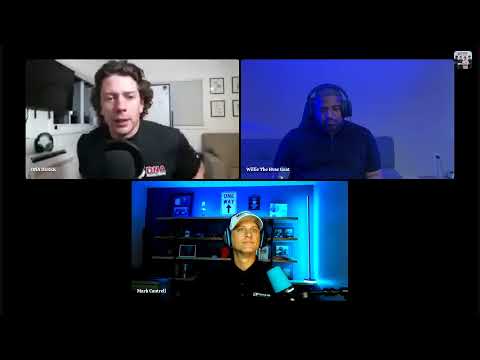
No guest this week — just Willie and Mark going deep on what the community brought to the chat. Zone system dampers, pricing confidence, refrigerant band-aids, Google reviews, and a real conversation about what it takes to hold your price when a client pushes back.

Meet the Hosts & Guest

Who's on this episode

Willie Ward headshot

Host

Willie Ward

Owner, GOAT Heating & Cooling · HVAC IS LIFE Founder · Charlotte, NC

Charlotte HVAC owner and founder of the HVAC IS LIFE community. Hosts the HVAC IS LIFE Podcast and co-hosts the weekly Live Q&A for contractors nationwide.

Mark Cantrell headshot

Host

Mark Cantrell

Owner, Upward Bound Media · HVAC Marketing · 15+ years experience

Residential and light commercial HVAC pro turned marketer. Runs Upward Bound Media, helping contractors win local search and turn their websites into a real pipeline.

Jump to section

  1. [3:58]Zone System Damper Calls — Charlotte's Ductwork Problem
  2. [6:26]Upflow Furnaces in the Attic — What Makes Charlotte Unique
  3. [7:26]Bundling Capacitor Replacement with Coil Cleaning
  4. [8:16]Willie's $100 Maintenance Contract — The Strategy Behind It
  5. [15:38]Maintenance Contract Pricing — Annual, Monthly, Pay-Per-Visit
  6. [27:31]Bubble Solution vs Electronic Leak Detector — Use Both
  7. [29:32]Getting Leads as a Solo Operator — No Ad Budget Required
  8. [30:02]Google Business Profile, Reviews, and Being Findable Online
  9. [41:54]AI Spam Calls and the Noise Getting Worse
  10. [54:48]HVAC Equipment Prices in 2026 — There Is No Way Around It
  11. [59:02]Not Every Customer Is Your Customer
  12. [1:03:22]Flat Rate Pricing and the Fear of Holding Your Price
  13. [1:04:45]Never Lower Your Price — Add Value Instead
  14. [1:11:52]HVAC Equipment Leasing — A Model Worth Watching
  15. [1:20:51]Oversized Systems — Still Everywhere, Still a Problem
  16. [1:27:13]Touching Old Equipment — The Liability That Comes With It

Zone System Damper Calls — Charlotte's Ductwork Problem

Willie has been running into zone system damper issues more than almost anything else lately. Most homes in Charlotte are two stories with zone systems, and almost none of them had ductwork upgraded when a new unit went in. The result: a scatter box off the unit feeding another scatter box, undersized returns, and constant airflow complaints that get blamed on the equipment instead of the distribution system. Honeywell round dampers up in high attic spaces are failing, and nobody who installed the original system ever accounted for what the ductwork needed to do.

Mark sees the same pattern in his market — nobody runs load calculations in new construction, it is always lowest bid, and it all gets scabbed together over the years until someone calls wondering why their upstairs is fifteen degrees hotter than their downstairs. The answer is almost always the ductwork.

"People always complain about airflow. That's what I think it is — people not taking into consideration the airflow."

Willie Ward

Actionable Takeaway

When you diagnose a zone system complaint, document the ductwork condition in writing on the invoice regardless of what the customer decides to fix today. If they replace only the equipment and the airflow complaint continues, you have already told them why in writing.


Upflow Furnaces in the Attic — What Makes Charlotte Unique

For techs who have not worked in the Charlotte market, Willie walked through what makes it different. About 90% of the systems he sees are upflow furnaces in the attic — not horizontal, not in a basement, not in a utility closet. Two-story homes mean two systems, both upflow, both in the attic. Installs are generally workable as long as the coil and supply plenum do not hit the ceiling, and existing flex usually lines up with a new coil if sizing is close.

The only real curveball is when a multi-position coil comes up too tall and you have to swap to an upflow-downflow configuration to make it fit. For techs used to basements, crawl spaces, or horizontal applications, Charlotte is a different world — but once you understand the pattern, the work is efficient and repeatable.

"90% furnace in the attic. If it's two systems, it might be two furnaces upflow in the attic."

Willie Ward

Actionable Takeaway

When quoting a replacement in a market-specific installation type you are not familiar with, ride along with a local tech before pricing the job. Installation access and configuration dramatically affect labor time and material requirements.


Bundling Capacitor Replacement with Coil Cleaning

Joshua asked a question many techs and owners deal with: what do you do when the boss says the client must agree to both a capacitor and a coil cleaning, or you do neither? Willie's answer: you cannot force a client into anything, but you can structure the offer so well they make the obvious choice themselves. His model: service call is $100, maintenance contract is $100, bringing the client to $200. Add the capacitor at $285 and give them 15% off the part — not the trip — for being on contract. They do the math and ask to sign up.

Mark added the technical logic: a dirty condenser is usually why the capacitor failed in the first place. Overheating kills capacitors. You are not upselling — you are fixing the actual cause. The cleaner framing: tell the client you cannot warranty the capacitor without cleaning the condenser, because that is true. If that capacitor fails in three weeks because the coil was never cleaned, you are eating it.

"Boom. I have you now. I have you for a whole year to sell you anything in this house."

Willie Ward

Actionable Takeaway

Build your maintenance contract discount into the service call presentation. The math does the selling. When the client sees that signing up saves them money today and gets them two visits a year, the contract becomes the obvious move — not a separate sales pitch.


Willie's $100 Maintenance Contract — The Strategy Behind It

Willie runs a $100 maintenance contract that includes two cleaning visits per year, no filters. He does not make money on it directly and does not try to. He compares it to advertising spend — if you are throwing thousands at digital ads with uncertain returns, why not put that energy toward the customer already in front of you? The contract is what puts you in that house twice a year, makes you the person who finds the failing capacitor before July, and makes you the first and only call when the compressor dies six years later. He has built 500 residential contracts on this model.

Mark explained the business logic: you do not make money on maintenance. You make money on the install five or six years into a relationship with someone who never got another quote because they already had a guy. The $100 is not the revenue — it is the cost of keeping the competition out.

"I have 500 contracts of different residential clients. And it's something about a contract — when you say a contract to a client, it's like, I have a contract with them."

Willie Ward

Actionable Takeaway

If you are not tracking maintenance clients in your CRM with notes on each visit and each item observed, start today. Every notation is a future sales opportunity. The client who declined the air scrubber in January may be ready for it in October.

Don't miss the next one

Get every new Q&A in your inbox

Live episode alerts, key takeaways, and resources from each guest — every other Thursday.

No spam. Unsubscribe anytime.


Maintenance Contract Pricing — Annual, Monthly, Pay-Per-Visit

Derek in Raleigh does one visit per year at $3.49, which works for his market. Willie does $100 for two visits annually. Mark favors monthly billing for its simplicity — clients set it and forget it, the relationship stays warm, and you schedule in spring and fall when ready.

The key insight both returned to: the price of the maintenance plan almost does not matter as long as it creates a consistent reason to be in the home. What you are really competing for is not the $99 or the $350 — it is the relationship that leads to the $12,000 system replacement when the equipment finally gives out. The maintenance plan that is easiest for your clients to say yes to is the right one for your market, as long as you are executing the visit well and presenting what you find.

"Everybody got a different way of doing things. Not to say my way is better or your way is better. Whatever works for your company is what works for your company."

Willie Ward

Actionable Takeaway

If you are on annual billing and customers are calling during peak season to collect their prepaid maintenance, consider offering a shoulder-season discount to shift those visits to spring and fall. You protect your busy season and still deliver the service you owe.


Bubble Solution vs Electronic Leak Detector — Use Both

Marty asked about soap bubbles versus electronic leak detectors, pros and cons. The answer from both Willie and Mark: use both, every time. Willie does an electronic sweep first to find the general area, then follows up with bubbles to pinpoint the exact location. Sometimes you look at a fitting and it is visibly oily — you go straight to bubbles.

Mark added that electronic detectors alert you something is there without always telling you exactly where, and bubbles confirm and locate precisely. A false positive or a hit from above that is dripping down can send you chasing the wrong spot with an electronic detector alone. The rule is the same as everything in HVAC: test and verify. Never trust one method alone.

"You got to always verify. Just like anything in HVAC — you test and verify."

Mark Cantrell

Actionable Takeaway

Stock both a quality electronic leak detector and bubble solution on every truck. Use the detector to narrow the area and bubbles to confirm. Document the leak location and source on the invoice before adding refrigerant so the client understands what was found and where.


Getting Leads as a Solo Operator — No Ad Budget Required

Jordan asked how to get leads when word of mouth is working but you need more of it and have no money for ads. Mark's answer was immediate: Google Business Profile first, no exceptions. If someone cannot find you on Google after meeting you in a parking lot, the conversation is over. They searched your name, found nothing, and now they think you are a scam. You have to be Googleable.

Build the profile, start collecting reviews immediately, and make sure the phone number is correct. Then tell every customer directly that you want referrals — say the words out loud. Go to the local chamber of commerce. Sponsor a youth sports team. Talk to people in the filter aisle at Lowe's or Home Depot. Willie does exactly that — if he sees someone holding a filter, he walks over and says he does HVAC. The second someone walks away from that conversation, they are searching your name. Make sure something comes up.

"You got to have some type of track history. If nobody can find you, why would they buy anything from you?"

Willie Ward

Actionable Takeaway

Go to your Google Business Profile today and confirm your phone number, address, and business hours are correct. Then text your last ten customers and ask them directly for a Google review. Include a direct link. Reviews on Google are the single highest-return marketing activity available to a solo operator.


Google Business Profile, Reviews, and Being Findable Online

Mark and Willie both made clear that the Google Business Profile is not optional — it is the foundation of digital presence for any HVAC business. Send a review request after every paid service call, either through your CRM automatically or manually via copy-paste text. Push everything to Google — House Call Pro's own review platform generates reviews that do not move the needle the way Google does.

Willie uses a QR code sticker on the back of his phone so clients can scan on the spot and land on his full Google presence. Mark's company uses NFC review cards with embedded chips — the client taps, they are on the review page immediately. Both mentioned refrigerator magnets as one of the most stubbornly effective low-tech marketing tools available. Mark still has one from an attorney on his fridge four years later. That attorney is on his fridge every single day.

"Even when you go put boots on the ground, as soon as you get out of sight — boom — they search you. And if you don't have a Google, he ain't nobody."

Mark Cantrell

Actionable Takeaway

After every completed and paid service call, send a follow-up text with a direct link to your Google review page. If your CRM does not automate this, create a saved text message that you send manually within an hour of closing the job. Consistency here compounds faster than any paid advertising.


AI Spam Calls and the Noise Getting Worse

Willie mentioned getting hammered with calls claiming to be from Google — back-to-back from different numbers, so aggressive he missed a real client call because he could not tell what was real. Mark confirmed: none of those calls are Google. They are people in other countries or outbound AI agents programmed to cold-call business owners. AI agents cost nothing to run, so the volume keeps climbing with no natural ceiling.

Mark dropped all outbound activity from his own business because the experience from the receiving end is so bad he refuses to be on the other side of it. The irony: the better your Google ranking and the cleaner your web presence, the more of these calls you receive, because the bots scrape the most visible businesses first.

"The better that you rank, the better that your website operates — the more people hit you up saying that your stuff sucks."

Mark Cantrell

Actionable Takeaway

Set your phone to send unknown callers to voicemail. Legitimate clients will leave a message. AI agents and spam callers almost never do. This protects you from missing real calls by getting conditioned to ignore your phone during a streak of spam.


HVAC Equipment Prices in 2026 — There Is No Way Around It

Willie made a point aimed at homeowners watching: if you have a good HVAC contractor, stay loyal to them. Prices are going up again. A basic residential unit — before pad, before disconnect, before labor, before anything — can run over four grand just for equipment. When a client looks up prices online to verify your quote, they will find that the cost is high no matter what. That is not your markup — that is the market.

The contractors who try to work around this by discounting their labor or trimming margin to win the job are the ones working twice as hard for half the result. Charge what you need to charge to stay in business and keep doing good work. The alternative is burning out for nothing while the market continues to move against you.

"At cost you could tell these people the cost and not even charge labor and they're going to be like — that's high. Off the bat."

Willie Ward

Actionable Takeaway

When a client pushes back on price, open your phone and show them the equipment cost on a supply house website. Not to justify yourself — to educate them. Most homeowners have no idea what a condenser costs before installation. Seeing the number changes the conversation from negotiation to math.


Not Every Customer Is Your Customer

Mark made this point as clearly as it can be made. There are people who buy used Kias and people who buy Cadillacs. Those are not the same customer and they never will be. If someone wants the lowest possible price and refuses to pay for quality work, they are not your customer — and that is completely fine. Let them go to the contractor who will do it for $200. You are not competing with that contractor because you are not in the same business.

When you turn away a client who is not a fit, you protect your time for the one who is. Willie added what his mentor always told him: keep your emotions out of business. If someone will not pay your price, thank them for calling and wish them well. The next job will pay full price. The client who leaves for $500 less will be back eventually — after the cheaper contractor lets them down.

"Keep your emotions out of business. This is business. Okay, thank you. I appreciate you for calling me."

Willie Ward

Actionable Takeaway

Write down a one-sentence script for declining a client who will not pay your price. Rehearse it. Something like: "I understand — this may not be the right fit for us right now, but I appreciate your time." Saying it cleanly and without emotion is a skill that takes practice.


Flat Rate Pricing and the Fear of Holding Your Price

A YouTube viewer said he pitches too low because he does not want to be the guy who does people wrong — but his work is worth more. Willie and Mark both recognized the pattern immediately. The fix Mark recommends: a printed flat rate price book. Not a tablet, not a verbal estimate — a physical book. You open it, point to the number, and that is the price. You are not making an argument. You are reading a menu. The restaurant does not negotiate the steak price. Neither do you.

Willie added that clients can smell hesitation. Present the price with certainty and stop talking. The silence that follows is on them. Fill that silence and you have already lost. Confidence in pricing is not a personality trait — it is a skill that comes from repetition. Every time you hold your price without flinching, it gets easier.

"You're reading off a menu. The restaurant doesn't negotiate the steak price. Neither do you."

Mark Cantrell

Actionable Takeaway

Before your next sales call, say your price out loud ten times followed by complete silence. The discomfort with that silence is what makes contractors fold. Practice holding it until someone else speaks first.


Never Lower Your Price — Add Value Instead

If a client pushes back and you feel the need to respond, the answer is never to lower the number. Add value instead. Throw in a media filter. Add a surge protector. Offer something that costs you less than the discount would cost you and makes the client feel like they won. The moment you lower your price, you have trained that client and everyone they talk to that your prices are negotiable.

Willie told the story of a longtime client he had helped for years — showed up when needed, gave deals, built real trust — who at the moment of a real compressor diagnosis before a house sale called someone else, got a band-aid fix for $200, and told Willie he was trying to get over on him. That client is blocked. The lesson: some clients are not your clients no matter how long you have served them. The relationship was built on discounts, not on value.

"Never lower your price. Never never lower your price. If you must give more, you can add value — but don't lower the price."

Mark Cantrell

Actionable Takeaway

Build a short list of low-cost add-ons you can offer when a client pushes back — a one-inch filter, a system inspection report, a priority service call slot. These cost you almost nothing and give the client a reason to say yes without you touching the number.


HVAC Equipment Leasing — A Model Worth Watching

Willie has an upcoming meeting with a solar company that has gotten into HVAC leasing — 10 to 12 year contracts, renewable at the end with an equipment upgrade option. Mark explored something similar years ago and ran into legal complications: once a system is brazed into a house it becomes part of the structure, and repossession is legally gray area in most states. The workarounds exist — mechanical liens on the property that get paid out at sale — but they are complicated and slow.

Financing through established lenders remains the cleaner, more widely understood path for most contractors. Willie's approach: he is open to hearing anyone out now that he has the platform and reach, but will not commit to anything he cannot fully stand behind for his clients.

"Once you braze it in, it's like part of the house now. How do you repo that?"

Mark Cantrell

Actionable Takeaway

If you are exploring leasing models, talk to an attorney in your state before structuring any agreement. What is legal in one state may expose you to liability in another. Financing is simpler and carries less operational risk for most small shops.


Oversized Systems — Still Everywhere, Still a Problem

Zach dropped into the chat to say he downsizes about 75% of the systems he installs. Willie and Mark believed it without hesitation. Oversized systems are everywhere — short cycling, persistent humidity problems, units that hit setpoint in seconds because they are double the capacity the space actually needs. Often it is a builder who never ran a Manual J. Sometimes it is a previous contractor who let a client talk them into bigger is better. Sometimes it is just new construction lowest-bid mentality where nobody runs a load calculation and nobody ever will.

The professional move: tell the client the system is oversized, document it, and if they insist on going bigger anyway, get it in writing and charge full price to come back later and correct it.

"Can't figure out why it's 65 degrees in here but 95% humidity. Because your system runs for about 3 seconds flat."

Mark Cantrell

Actionable Takeaway

Run a load calculation on every replacement — even if you already know what size is going in. Document the calculation on the invoice. If the existing system is oversized and the client declines a corrected size, note their refusal in writing. You are protecting yourself from the callback that comes when the oversized system does exactly what oversized systems do.


Touching Old Equipment — The Liability That Comes With It

Willie told the story of a wall-mount air handler where his team did a full cleaning — deep coil clean, drain work, float switch, P-trap, condenser — everything ran perfectly. Then the blower motor went out. He ate the motor, not because it was his fault, but because he was the last person to touch it and did not want the fight. Mark had the same experience: he has killed blower motors just by cleaning the blower wheel. The motor was fighting a dirty wheel for years. Clean the wheel, the motor spins freely, the current draw changes, and the weakened windings cannot handle the new load. They fail within days.

The lesson: when equipment is at end of life, have the conversation before you touch anything. Tell them the system is at end of life. Get it in writing. Document that they declined replacement. Cover yourself before the wrench touches anything.

"You know what happens when you touch old stuff and try to have it — you always the last person to touch it."

Willie Ward

Actionable Takeaway

Create a simple end-of-life disclosure you add to the invoice for any system over twelve to fifteen years old before you begin work. One sentence noting the system's age, condition, and the client's acknowledgment that components may fail during or after service. Get a signature or at minimum a written approval via text.

Featured Quotes

"You're reading off a menu. The restaurant doesn't negotiate the steak price. Neither do you."

Mark Cantrell

"Never lower your price. If you must give more, add value — but don't lower the price."

Mark Cantrell

"If someone can't find you on Google, the conversation you had in that parking lot is over."

Mark Cantrell

"You got to have some type of track history. If nobody can find you, why would they buy anything from you?"

Willie Ward

"Keep your emotions out of business. Okay, thank you. I appreciate you for calling me."

Willie Ward

"You know what happens when you touch old stuff and try to have it — you always the last person to touch it."

Willie Ward

"Can't figure out why it's 65 degrees in here but 95% humidity. Because your system runs for about 3 seconds flat."

Mark Cantrell

Questions Answered

Click a timestamp to jump to that moment on YouTube.

Featured Resources & Sponsorship

Tools, offers, and partners from this episode

Episode Sponsor

Free consultation + 10% off all services for HVAC IS LIFE listeners.

Upward Bound Media

HVAC-specialized SEO, websites, and digital marketing — built by people who actually know the trade.

Tools & products mentioned

  • CRM

    House Call Pro

    Field service software with automated review requests and client notes — useful for maintenance contract tracking.

  • Reviews

    Google Business Profile

    Free — and the only review platform that meaningfully moves your local search ranking. Push all review requests here.

Want to reach HVAC pros?

Sponsor a future episode of HVAC IS LIFE.

Become a sponsor

Topics

HVAC zone system dampersCharlotte HVACupflow furnace atticflat rate pricingHVAC pricing confidencegetting HVAC leadsGoogle Business Profile HVACone man HVAC businessHVAC maintenance contractscapacitor replacementcoil cleaningHVAC reviews strategyoversized HVAC systemsequipment prices 2026old equipment liabilityleak detection HVACAI spam callsHVAC ductwork problemsHVAC business tipsUpward Bound MediaGOAT Heating Cooling

Subscribe for more

Never miss a live Q&A.

HVAC IS LIFE airs every other Thursday. Hit subscribe on YouTube and join the email list for episode alerts and show notes.

Email alerts

Get the next episode in your inbox.

No spam. Unsubscribe anytime.

Related Episodes

More Q&As from the crew.

Community

Community (0)

Sort:

Join the conversation.

Create a free account or sign in to comment.

Loading comments…