All Q&As

March 26, 2026 · Live Q&A 1h 46m

Processes, Procedures & the Private Equity Problem with Jason Bowman

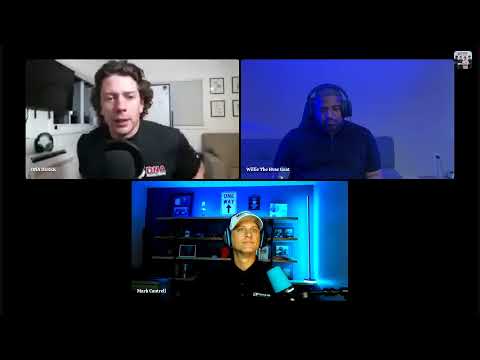
22-year Houston HVAC veteran Jason Bowman joins Willie and Mark to talk through what it actually means to set your own service standards, why private equity changes the technician experience, how to build real rapport with homeowners, and the hard truth about going from employee to business owner.

Meet the Hosts & Guest

Who's on this episode

Jason Bowman headshot

Guest

Jason Bowman

HVAC Technician · 22 Years in the Trade · Houston, TX

Jason Bowman has been in the HVAC trade since 2004, working across residential service and light commercial refrigeration in the Houston, Texas market. With over two decades of on-the-job experience and a philosophy built around doing the right thing for every homeowner — regardless of who signs the paycheck — Jason brings a ground-level perspective on what professional HVAC service actually looks like when it is done with care, technical rigor, and empathy.

Willie Ward headshot

Host

Willie Ward

Owner, GOAT Heating & Cooling · HVAC IS LIFE Founder · Charlotte, NC

Charlotte HVAC owner and founder of the HVAC IS LIFE community. Hosts the HVAC IS LIFE Podcast and co-hosts the weekly Live Q&A for contractors nationwide.

Mark Cantrell headshot

Host

Mark Cantrell

Owner, Upward Bound Media · HVAC Marketing · 15+ years experience

Residential and light commercial HVAC pro turned marketer. Runs Upward Bound Media, helping contractors win local search and turn their websites into a real pipeline.

Jump to section

  1. [0:02]Jason Bowman — 22 Years in Houston HVAC
  2. [8:33]Setting Your Own Processes and Procedures
  3. [12:04]Build Rapport Before the Technical Conversation
  4. [21:25]Private Equity HVAC — The Real Impact on Technicians
  5. [27:05]Empathy in Residential Service — A Different Mindset
  6. [18:00]MeasureQuick — Giving Clients Facts Instead of Opinions
  7. [33:48]Side Discharge Condensers and Inverter Systems
  8. [37:17]EPA and Refrigerant Recovery — Take Pride in Your Work
  9. [39:14]Home Depot Selling Capacitors and Fan Motors
  10. [41:13]Press Fittings — The Debate Continues
  11. [46:28]454B Refrigerant Prices and Where They Landed
  12. [48:46]Where HVAC Is Headed in the Next 5 to 10 Years
  13. [53:44]Brand, Pricing, and Why They Go Hand in Hand
  14. [1:00:44]Callbacks — Root Causes and How to Stop Them
  15. [1:02:00]How Long Does a Real Maintenance Take?
  16. [1:04:40]What a Thorough Maintenance Actually Includes
  17. [1:07:11]Maintenance Programs — Locking in the Long Relationship
  18. [1:16:47]Balancing Install and Service in the Same Day
  19. [1:25:58]Dispatch vs Tech — The Oldest Tension in the Trade
  20. [1:32:23]Training the Next Generation Without the Old Methods
  21. [1:41:57]Going from Employee to Business Owner — The Real Story

Jason Bowman — 22 Years in Houston HVAC

Jason Bowman has been in the HVAC trade since 2004. Based in Houston, Texas — a market of eight million people with a climate that demands HVAC service almost year-round — he has worked primarily on the residential service side with additional background in light commercial refrigeration. He does not run his own company. What he brings to this episode is something different and arguably more useful for most of the people watching: the ground-level perspective of a career technician who has seen everything, worked for multiple types of companies, and built his own standard of care that does not depend on who signs his check.

Houston's service landscape is relentless. When the heat is on, it is on everywhere at once — you cannot throw a stone without hitting an AC technician. That competition and that pressure are what shaped Jason's philosophy: if you know what you are supposed to do on every single call and you actually do it, the company you work for matters a lot less than most people think. Your reputation is yours. The work is yours. The homeowner's experience is yours.

"I've been in this trade 22 years, bro. This is the best trade I've ever been a part of. I get to meet so many different people."

Jason Bowman

Actionable Takeaway

If you have been in the trade for more than five years, write down the non-negotiable steps you take on every service call — the things you do regardless of who dispatched you or how busy the schedule is. That list is your process. It is also what separates you from the guy in the next truck.


Setting Your Own Processes and Procedures

The conversation started where Jason and Willie had already been talking before the stream: processes and procedures. Jason's core argument is that the company you work for matters far less than the standard you hold yourself to. Whether you are at a private equity firm with 200 trucks or a two-person shop, if you know what to check on every call and you check it — airflow, static pressure, delta T, refrigerant pressures — you are doing the job right. The company does not give you that. You give yourself that.

The failure mode he described is common: companies throw someone in a van and the only metric they track is how much revenue came in that day. There is no blueprint, no sequence of operation, no expectation beyond closing the ticket. In that environment, the only thing that protects a technician's reputation and a homeowner's equipment is the technician's own internalized standard. You have to know what a correct service call looks like and execute it even when nobody is watching, even when dispatch is pushing you to the next call, even when it is already 4:30 on a Friday.

"Get your own process down. Yeah, there are a lot of private equity companies that are just going to throw somebody in a van. But if you know what you need to do on every single call — you do the right thing."

Jason Bowman

Actionable Takeaway

Write out your service call checklist as if you were handing it to someone else to do the job. If you cannot write it down, you do not have a process — you have habits. Habits get skipped. Processes do not.


Build Rapport Before the Technical Conversation

Before Jason talks about what is wrong with a system, he talks about whatever he sees in the house that connects them as people. Mark made the same point with Boba Fett sitting on his shelf — you walk in, you spot something human, you comment on it genuinely, and the walls come down before you ever open a service report. A homeowner who trusts you as a person is going to listen to your technical assessment as a professional. A homeowner who feels like you are a robot in a uniform is going to push back on everything.

This is not a sales technique. It is basic human behavior. People buy from people they like and trust. The HVAC technician who walks in, does the inspection, says here is your problem here is the price, and walks out might have done a technically perfect job. They will still get a three-star review that says something like he was cold-hearted, just here for the money. The technician who spent three extra minutes being a person first closes more jobs, gets better reviews, and gets referred more often — even if their prices are higher.

"You could have all the technical knowledge in the world, but if you're not able to relate to people on their level, you're already fighting an uphill battle, man."

Mark Cantrell

Actionable Takeaway

Before your next service call, identify one thing in the house — a photo, a sports jersey, a dog, a hobby — and lead with it. Not a performance. A genuine observation. Give it thirty seconds. Then do your inspection. See how different the conversation about repairs feels afterward.


Private Equity HVAC — The Real Impact on Technicians

A viewer asked about the consequences of private equity buying up local HVAC shops and turning them into sales operations rather than service businesses. Jason reframed the question in a way that shifted the entire conversation: why does it matter who you work for if you know what you are supposed to do and you do it? The sales pressure exists in any company. The technician who has internalized a real service standard does not need the company to tell them to do the right thing.

Mark's take was more direct: not all private equity companies are bad, but the model that creates problems is the one that puts commission-based technicians in the field with a mandate to close more and more regardless of what the system actually needs. That creates the opposite of what a homeowner deserves. The silver lining, and Mark made this point sharply: if private equity buys every single company in your market except you, you become the only contractor out there not pushing people into things they do not need. You cannot buy that kind of competitive position with any amount of advertising spend.

"Let private equity buy up every single company except you. Now you have a monopoly because you're the only guy out here not completely screwing everybody."

Mark Cantrell

Actionable Takeaway

The next time you feel threatened by a private equity company moving into your market, write down three things you do on every service call that they probably do not. Those three things are your positioning. Lead with them in every homeowner conversation.

Don't miss the next one

Get every new Q&A in your inbox

Live episode alerts, key takeaways, and resources from each guest — every other Thursday.

No spam. Unsubscribe anytime.


Empathy in Residential Service — A Different Mindset

Jason made one of the most useful distinctions of the episode: commercial has a budget, residential is on a budget. When you walk into a business, you are dealing with someone whose job is to keep the building running. They have a line item for HVAC. When you walk into a family's home, you are walking into their life. The compressor failing is not a facilities issue. It is a financial stress on top of a comfort crisis and they already know this is going to be expensive before you open your mouth.

That context changes everything about how you communicate. Not what you do technically — the diagnosis is the diagnosis. But the way you talk about what you found, how you present options, whether you write things down so they can visualize it, whether you treat their system the way you would treat your grandmother's system — all of that matters differently in a residential context than it does in commercial. Jason described using a yellow legal pad to write out everything he finds and everything he would recommend, and telling homeowners: these are the things I would do at my own grandmother's house.

"Commercial has a budget. Residential is on a budget. You walk into a family's home — they're going through their life just like everybody else."

Jason Bowman

Actionable Takeaway

On your next maintenance call, write down your findings on paper before you talk about price. Walk the homeowner through the list item by item in plain language. The act of seeing it written down changes how they receive the information — it goes from a verbal pitch to a documented assessment.


MeasureQuick — Giving Clients Facts Instead of Opinions

Jason uses MeasureQuick on his service calls and confirmed it has changed the way he presents findings to clients. When the app shows a 28 degrees superheat and 4 degrees subcooling and flags the system as out of range, he does not have to convince the homeowner of anything. He just shows them the screen. The data is already telling the story. All he has to do is interpret it in plain language — you are under-charged, here is what that means for the life of your compressor, here are your options.

Mark added that contractors using MeasureQuick to grade their commissioned systems — and sharing those A+ grades on social media the way Jason Julian does in Arkansas — are marketing their professionalism without making any claims about it. The grade speaks for itself. A homeowner who sees an A+ commissioning report posted on Facebook already trusts the contractor before they have called. The data is the credential.

"You're not even trying to convince the customer anymore. You're just showing them the facts. Right here in black and white."

Mark Cantrell

Actionable Takeaway

Download MeasureQuick and run one complete diagnostic workflow on your next service call. Print or screenshot the results and show the homeowner. You do not need to explain every number — just show them where the system is out of range and what you are going to do about it.


Side Discharge Condensers and Inverter Systems

Cory asked the group how they feel about side discharge inverter condensers. Both Jason and Willie are in favor. Jason's take: side discharge systems give you a selling advantage on two fronts. First, the quieter operation and the first-stage heat pump capability make them an easier upsell conversation. Second, and more importantly, if you are installing a side discharge inverter system properly, you cannot just slap it on the existing duct work. The system's efficiency depends on the duct work performing correctly. That gives you a legitimate, data-backed reason to quote duct work at the same time — not as an upsell, but as a prerequisite for the equipment to do what you are selling it to do.

Willie added the dual fuel angle: a side discharge heat pump with a furnace as backup is one of the strongest value propositions you can put in front of a homeowner concerned about rising gas prices. You get the efficiency of the heat pump on the shoulder seasons and the reliability of gas on the coldest nights. That is a story that sells itself when you tell it correctly.

"Side discharge — it's no more just slapping it on with fiberglass duct that was in there for 15 years. You got to fix that. And that's an opportunity."

Jason Bowman

Actionable Takeaway

On your next side discharge install quote, include a static pressure reading of the existing duct system as part of your presentation. If the numbers are out of spec — and they usually are — you now have a data-backed reason to quote the duct work. The conversation goes from upsell to necessity.


EPA and Refrigerant Recovery — Take Pride in Your Work

A viewer named Chris asked about refrigerant recovery — his company does not believe in it, his tech told him there are no EPA police. Jason's response was direct and personal. When he was 19 or 20, he watched a tech crack the lines, let the refrigerant vent, and move on. He knew it was wrong. He did not say anything because he was young. Now at 40, he would call it out immediately. He would say: you either step aside or we get someone else out here.

Mark put it even more bluntly: why are you in this business if you are not going to do it right? If a homeowner hired you to take care of their equipment and you are cutting corners on nitrogen purging, on proper brazing technique, on refrigerant recovery — you are not doing the job you were hired to do. It is not about whether anyone is watching. It is about the fact that you have to go to sleep at night and wake up and do it again tomorrow. Set your process. Hold your standard. Do the right thing regardless of what the guy next to you is doing.

"Take pride in your work. I don't care what everybody else is doing. Braze with nitrogen. Recover the refrigerant. Just take care of their stuff the way it should be taken care of."

Mark Cantrell

Actionable Takeaway

If your current company does not require refrigerant recovery, document your own practice anyway. Recover on every job. It costs you five to ten minutes. It protects the environment, it protects your certification, and it protects you legally if something goes wrong on that job later.


Home Depot Selling Capacitors and Fan Motors

The group noted that Home Depot is now selling capacitors and fan motors directly to homeowners. The reaction was more amused than alarmed. Willie's position: if they want to buy the part, fine. Your labor rate stays the same. The part is their problem — which means the warranty is their problem. You show up, you install the part they bought, you charge your normal labor rate, and you explicitly tell them that you cannot warranty a part you did not supply. They bought the hamburger without the bun. You make it clear what is and is not included.

Mark's observation is that customer-supplied parts almost always come with other issues attached. Someone who has already been on YouTube and bought a capacitor usually has not done a full system evaluation. There is almost always something else going on that the YouTube video did not cover. Which means you still have opportunity on the call — you just have to be even more thorough in your inspection because your name is on the job whether you supplied the part or not.

"They got the hamburger but not the buns. They got the part, but there's no warranty. And when you show up, there's always something else going on."

Willie Ward

Actionable Takeaway

Create a one-sentence customer-supplied parts policy and put it on your service agreement. Something like: labor warranty applies only to parts supplied and installed by our company. Say it out loud before you start the job. Document it on the invoice.


Press Fittings — The Debate Continues

Jason is not on press fittings yet. Willie is not fully convinced either. The cost of the fittings — $25 per elbow was the number thrown out — combined with the cost of proprietary press tools, the multiple competing brands, and the liability concern around a fitting that fails over a weekend add up to enough hesitation that both are staying with brazing for now. Brad in the chat made the counterpoint: he has pressed hundreds of coils and systems over two-plus years without a single leak. The key, Willie agreed, is procedure — marking the fitting before pressing, confirming alignment, following every step. The guys who cut corners on the press are the same guys who would cut corners on the braze.

The deeper concern is commercial — specifically large inverter and VRF systems where temperature cycling is extreme. A commenter from New Jersey mentioned leaks on a VRF system using press tools from temperature changes in heating and cooling. Jason pointed out that proper nitrogen flow through the system during commissioning is just as important with press as it is with brazed fittings. Process is still the answer. The tool changes. The standard does not.

"Some guys just slap it on and press. You've got to take the pride in that job, man. Follow the procedure — mark it, align it, press it. Same as brazing."

Willie Ward

Actionable Takeaway

If you are considering adding press tools, talk to a contractor who has been using them for at least two years before you invest. Ask about failure rates, about which brands of fittings they trust, and about the specific scenarios where they still choose to braze. Make an informed decision, not a trend decision.


454B Refrigerant Prices and Where They Landed

The group checked in on where 454B pricing had settled. In the Charlotte and Oklahoma markets, it had come back down to roughly $450 to $500 per drum — a significant drop from the $1,500 to $2,000 per drum highs that had hit around six to seven months prior when the transition supply crunch was at its worst. Part of what brought the price down, Willie noted, was the discovery that contractors could run 410A through new systems under certain conditions — which released some of the speculative pressure on 454B availability.

R22 came up in the same conversation. Willie still has R22 stock and charges accordingly — $200 or more per pound. His honest recommendation when an R22 system needs a charge: find the leak first. Give the homeowner the full picture. How long have they been in the home? How long do they plan to stay? What does the math look like on continued repair versus replacement? Write down all the options. Let them decide. Do not make the decision for them, but do not leave them in the dark about what continuing to prop up an R22 system is going to cost over time.

"R22 — I still got it, I just charge them a lot for it. And if you don't like the price, hey, you might need a new system."

Willie Ward

Actionable Takeaway

If you still carry R22, write out a simple cost comparison you can show homeowners: the cost of a charge at current R22 prices versus the cost of a replacement system financed over ten years. Most homeowners have never seen that comparison. Seeing it changes the conversation.


Where HVAC Is Headed in the Next 5 to 10 Years

A viewer named Matt asked where the industry is going for small business owners and operators and what they should be doing right now to stay ahead. Willie's answer was grounded and practical: worry about right now. Be firm on your pricing. Be firm on your processes. Be firm on how you are adapting to industry changes — refrigerants, equipment, regulatory shifts — and be more proactive and active in your business than you have ever been. Money is tighter. People are holding on to it longer. The window to win a job is narrower and the margin for error is smaller.

Jason added the Houston perspective: throw a stone and hit an AC tech. The competition has never been more crowded with people who went out on their own because it seemed easy. Most of them are not doing the right things. Which means the contractor who is — who recovers the refrigerant, who checks static pressure, who writes down findings, who follows up — does not have to fight for every job. They just have to be consistently, visibly better. That is a positioning strategy that no private equity company can copy because it requires actual care.

"You have to be 10 steps ahead or you get left behind. A few bad mistakes and a few lawsuits and you're out of the game."

Willie Ward

Actionable Takeaway

Write down the two or three things you do on every call that the average contractor in your market does not do. Then make sure those things are visible to homeowners — in your intake conversation, on your invoices, in your social media content. That is your brand.


Brand, Pricing, and Why They Go Hand in Hand

Mark said something that should be posted on the wall of every HVAC shop: brand and pricing go hand in hand. You can have the highest prices in your market, but if nobody knows who you are — if you do not have reviews, a web presence, a recognizable name — those prices do not hold. The homeowner has no context for why you are worth more. They just see the number. And when they have no other information to go on, they go with the lower bid.

The inverse is also true: a contractor with a strong local brand can charge more and win more jobs at that price because the homeowner has already decided they want them before they see the number. Willie described a shift in his own business — since he built his brand around being who he is, the caliber of client calling him changed. The clients who call expecting the cheapest option in town stopped calling. That is not a loss. That is the brand working exactly as it is supposed to.

"You must be pushing your brand because that's how people are going to trust you. And that's how you keep your pricing because your price makes sense when they know who you are."

Mark Cantrell

Actionable Takeaway

Look at your last ten five-star reviews and find the word or phrase that appears most often. That is what your brand actually stands for in the market — not what you think it stands for. Build your next three months of social content around that word.


Callbacks — Root Causes and How to Stop Them

Zachary asked about a tech on his team who gets great customer reviews but has a high callback rate. The panel was aligned: callbacks almost always come from laziness. Not incompetence — laziness. The moment where you thought about checking something and decided not to. The gauges that stayed in the truck because you were pretty sure the charge was fine. The coil you looked at through the door instead of pulling the panel. Willie said it with unusual candor: every time he has skipped a step, that step is the one that came back to bite him.

Jason described a turning point in his own career when he started taking his time on every single call and stopped worrying about what was next. Once he had the approximate time of a real maintenance internalized — the sequence, the order, what he checks and when — the pace became efficient without being rushed. The difference between a 45-minute maintenance and a 30-minute one is not ten percent more efficiency. It is one or two things that did not get checked. And one of those things is eventually the callback.

"Callbacks come from laziness, to be perfectly honest. If you literally just check the system and make sure the damn thing is working properly — what's the callback for?"

Mark Cantrell

Actionable Takeaway

Pull your last five callback tickets and identify the step that was skipped or the thing that was not checked on the original visit. That pattern is your process gap. Fix the process, not just the call.


How Long Does a Real Maintenance Take?

The honest answer: about an hour for one system. Willie said a real thorough maintenance is an hour. Two systems is two hours, more if the equipment is neglected. He had done a package unit that same week that had not been cleaned in five years — that was an hour and thirty minutes because he had to clean the outside, the inside, lift the top to get to the back of the coil. That is not a 45-minute job and it should not be.

Mark's answer was 45 minutes for a system he has been maintaining regularly and knows well. He is clear that this applies to a real maintenance — not a quick look and a filter check. And he is clear that anything genuinely dirty or neglected is a different category with a different price. Jason mentioned that big companies often clock techs at 30 to 45 minutes per maintenance and are asking are you done yet before the tech has finished. That pressure is what creates the inspection that gets skipped, which becomes the callback in August.

"A real thorough maintenance is an hour. If it's been five years since anyone touched it, add another half hour at minimum. That's not a quick look — that's a maintenance."

Willie Ward

Actionable Takeaway

Time your next three maintenance calls from arrival to departure and write down what you did at each stage. If you are regularly under 45 minutes, review your checklist and identify what is getting cut. If dispatch is pushing you, that is a conversation worth having with the office before peak season.


What a Thorough Maintenance Actually Includes

The viewer Chris asked what goes into a real maintenance. Willie's working list: airflow, checking everything, offering insulation on the copper line if it is corroded, Wi-Fi thermostat if they are still on a basic unit, return box assessment for a media filter upgrade, IAQ observation, condenser coil cleaning, heating check, all the good stuff. Everything the homeowner does not know they need because they think HVAC is just the box outside and the thing on the wall.

Blower wheel cleaning is extra. Evaporator coil cleaning is extra. He looks at both. If the blower wheel is dirty, he points to it and quotes separately. He uses a light through the evaporator coil to assess and quotes the cleaning if it is warranted. The maintenance is the baseline. Everything above the baseline is a documented finding with a quote attached. Brad added a point worth writing down: spend the extra 15 to 30 minutes talking to the customer after the technical work is done. That conversation is what builds the relationship that keeps them calling you back for the next 20 years.

"I'm coming in with the intent to check everything. And anything I find goes on the list. They don't have to do it now. But they're going to know about it."

Willie Ward

Actionable Takeaway

Build a standardized maintenance checklist with every item you check on every visit. At the bottom, add a section for observations — things you noted but did not address. Leave a copy with the homeowner every time. That document is your paper trail and your next sales conversation.


Maintenance Programs — Locking in the Long Relationship

Sean made the point in the chat and all three on screen agreed: membership programs are gold. Not because the maintenance itself is profitable — it is not, or barely — but because of what the membership does to the relationship. A homeowner with a maintenance contract is psychologically committed. When another contractor shows up and tries to quote them a new system, their first call is to you. Not because they are obligated — because they have a person. They have a guy. And in a market full of faceless companies, having a guy is worth more than any discount.

Willie described the flip side of this from personal experience: he had been the guy for certain clients for years, went and saved them from a bad situation, and the next time they needed service they called the company they had a maintenance contract with. Not him. Because that contract was the psychological anchor, not the relationship. The lesson: get the contract signed before someone else does. Even if the maintenance itself barely breaks even.

"If you can lock a client in, nine times out of ten they're going to stick with you. They've got a contract. They're calling them first. That's why you need to be them."

Willie Ward

Actionable Takeaway

If you do not have a maintenance program, build the simplest possible version and start signing people up on the first visit. Even a basic annual agreement at a low price point is more valuable than no agreement at all. The revenue from the maintenance is almost beside the point.


Balancing Install and Service in the Same Day

A viewer asked how to balance install speed and service accuracy when you are switching between both in the same day. Willie and Mark both acknowledged it: it is two different brains. An install is construction mode — building something, running lines, banging sheet metal, moving materials. A service call is diagnostic mode — listening, measuring, reasoning through what the system is telling you. Switching between them mid-day without a transition is one of the fastest ways to make mistakes on both.

Mark's practical solution: an install bag and a service bag, kept separate on the truck. The install kit has the tools you only use on installs. The service kit has your meters, your gauges, your test equipment. When the job type changes, the bag you reach for changes. The physical separation triggers the mental separation. Jason added that setting realistic time expectations with the office is the other half of it — tell them minimum four hours anytime you open a refrigerant system for repair. Do not let them schedule you into an impossible day and then rush through both jobs.

"It's two different brains, man. Install is construction. Service is diagnostic. You need that mental transition — and the right bag for the right job."

Mark Cantrell

Actionable Takeaway

Reorganize your truck to have physically separate zones for install tools and service tools. It takes an afternoon. It saves you from showing up to a service call missing the meter you left in the install bin. Small organizational investment with a significant reduction in wasted time.


Dispatch vs Tech — The Oldest Tension in the Trade

The comment from the chat said it better than anyone could: techs and dispatchers have been fighting since biblical times. Jason almost missed this entire podcast because he was chasing a low voltage short that turned out to be a transformer dropping voltage under load — not a wiring issue, not a ground issue, a failing transformer that looked fine on a bench check. He had to tell dispatch: I will be done when I am done. The transformer was the right call. The delay was the right call. A rushed diagnosis on a 7-and-12-ton split system is not a delay you want.

The fix, Jason said, is setting realistic expectations from the beginning. Know your skill set, know your pace, and communicate it honestly to the office. If you know that anything involving opening a refrigerant system is going to take four hours minimum, say that on the first call. Do not let dispatch build a schedule that treats your diagnostic time like a 30-minute oil change. And when something unusual comes up — as it always does — call the office early, not late.

"I'm going to be done when I'm done. I don't have a time limit for you at the moment. Some calls don't have a clock."

Jason Bowman

Actionable Takeaway

If you are in a company with dispatch, have a direct conversation about your average times for the most common call types before peak season starts. A dispatch team that understands how long things actually take books better schedules. A dispatch team guessing will always overbook you.


Training the Next Generation Without the Old Methods

The conversation drifted to how you train technicians today when you cannot train them the way you were trained. Willie laughed and said he cannot throw a wrench at his son, even though that is more or less how he learned. Mark admitted that most of his real learning happened right after he lost his patience and something finally clicked. Jason described the generation gap differently: it is not that the younger generation is weaker. It is that everything is busier and more complicated now, and sitting down with someone for a real extended training session is harder when you are also trying to keep trucks running and customers happy.

Willie's workaround: a slow day becomes a training day. Pull up ChatGPT, print out a quiz, sit the techs down, and see what they know. It is not formal. It is not a certification program. But it keeps the information moving and it signals to the team that growth is expected, not just assumed. Jason's broader point: find a mentor who answers the phone. Someone in a position you want to be in who has the willingness to talk you through the weird call at 2pm when you are standing in a 120-degree attic wondering what you are looking at. That relationship is worth more than any training program.

"If you don't have a mentor or somebody to ask questions to — a real live human to bounce stuff off of — you're not going to get as far as fast as you want to be."

Jason Bowman

Actionable Takeaway

Identify one person in the trade who is five to ten years ahead of where you want to be and reach out this week. Not a general follow on social media — a direct message asking if they have fifteen minutes to talk. Most people who have made it say yes. The ones who do not were never going to be the right mentor anyway.


Going from Employee to Business Owner — The Real Story

The closing conversation was the most honest one. Willie said if he were starting over today, in this economy, he would not go the Wild Wild West route he took. He would find a good company, get the experience, see the variety of equipment and situations, and work his way up with a real foundation under him. Mark added the gut check that nobody tells you before you make the jump: the person you are as an employee is not sufficient for what being an employer requires. The level of personal development — the discipline, the consistency, the inability to wake up on a bad day and just not show up — is something you only discover by being in it.

Jason put the real weight on it: most people who call themselves business owners early on are really just slaves to the job. No systems, no team, no processes — just them and a van and a phone. That is not a business. That is a job with more stress and no benefits. A real business is built when you have the overhead, the team, the processes, and the discipline to keep all of it running even when everything goes sideways at once. That takes longer than most people want to hear. But it is the only version of business ownership worth building.

"The person you were as an employee will not — is not sufficient for where you need to go to have employees. The leveling up you need to do is effing insane."

Mark Cantrell

Actionable Takeaway

If you are thinking about going out on your own, write down honest answers to these three questions before you do: Do I have a process for every service situation I encounter? Do I have enough customers who would follow me? Do I have enough capital to run for six months without a profit? If the answer to any of them is no, that is your next six months of work before you make the jump.

Featured Quotes

"I've been in this trade 22 years. This is the best trade I've ever been a part of."

Jason Bowman

"Let private equity buy up every single company except you. Now you have a monopoly because you're the only guy not screwing everybody."

Mark Cantrell

"Commercial has a budget. Residential is on a budget. You walk into a family's home — they're going through their life just like everybody else."

Jason Bowman

"Take pride in your work. Braze with nitrogen. Recover the refrigerant. Just take care of their stuff the way it should be taken care of."

Mark Cantrell

"Brand and pricing go hand in hand. Your price makes sense when people know who you are."

Mark Cantrell

"Callbacks come from laziness, to be perfectly honest. If you just check the system and make sure the damn thing is working properly — what's the callback for?"

Mark Cantrell

"The person you were as an employee is not sufficient for where you need to go to have employees."

Mark Cantrell

Questions Answered

Click a timestamp to jump to that moment on YouTube.

Featured Resources & Sponsorship

Tools, offers, and partners from this episode

Episode Sponsor

Free consultation + 10% off all services for HVAC IS LIFE listeners.

Upward Bound Media

HVAC-specialized SEO, websites, and digital marketing built by people who actually know the trade.

Tools & products mentioned

  • Software

    MeasureQuick

    Diagnostic workflow app used by Jason on service calls. Grades system performance, flags out-of-range readings, and generates a visual report you can show homeowners. Free version available. Pro version adds AI diagnostics and system grading.

  • Guest

    Jason Bowman on Facebook

    Connect with Jason — 22-year HVAC technician based in Houston, TX.

  • Marketing

    Upward Bound Media

    HVAC-specialized SEO, websites, and digital marketing — free consultation + 10% off for HVAC IS LIFE listeners.

Guest offers & downloads

From Jason Bowman

Want to reach HVAC pros?

Sponsor a future episode of HVAC IS LIFE.

Become a sponsor

Guest Resources

Jason Bowman

HVAC Technician · 22 Years in the Trade · Houston, TX

Jason Bowman has been in the HVAC trade since 2004, working across residential service and light commercial refrigeration in the Houston, Texas market. With over two decades of on-the-job experience and a philosophy built around doing the right thing for every homeowner — regardless of who signs the paycheck — Jason brings a ground-level perspective on what professional HVAC service actually looks like when it is done with care, technical rigor, and empathy.

Topics

HVAC processes proceduresprivate equity HVACHVAC technician standardsHVAC callbacksHVAC maintenance checklistresidential vs commercial HVACHVAC refrigerant recoveryEPA refrigerant rulespress fittings HVAC454B refrigerant pricesR22 replacement refrigerantMeasureQuickHVAC brand buildingHVAC pricing confidenceHVAC business ownershipemployee to business owner HVACdispatch vs technicianHVAC trainingJason BowmanHouston HVACWillie WardMark CantrellUpward Bound Media

Subscribe for more

Never miss a live Q&A.

HVAC IS LIFE airs every other Thursday. Hit subscribe on YouTube and join the email list for episode alerts and show notes.

Email alerts

Get the next episode in your inbox.

No spam. Unsubscribe anytime.

Related Episodes

More Q&As from the crew.

Community

Community (0)

Sort:

Join the conversation.

Create a free account or sign in to comment.

Loading comments…