All Q&As

April 7, 2026 · Live Q&A 2h 11m

High Performance Contracting & Data-Driven HVAC with Anthony Woo — NCI Contractor of the Year

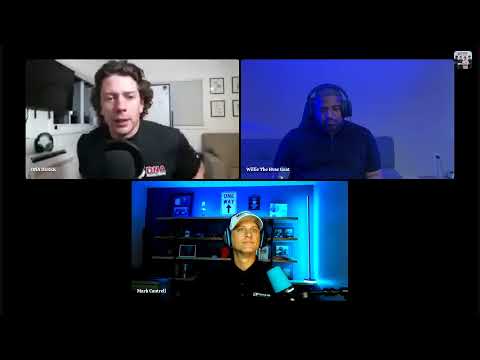
Anthony Woo of Quebec, Canada — the 2024 NCI Contractor of the Year — joins Willie, Mark, and HVAC IS LIFE moderator Michael James Plezia to cover high performance contracting, data-driven diagnostics, hiring and training green technicians, building SOPs for rapid growth, cold climate heat pumps performing at minus 40, and the mindset it takes to go from employee to owner at breakneck speed.

Meet the Hosts & Guest

Who's on this episode

Anthony Woo headshot

Guest

Anthony Woo

Owner, ACG Climatisation · NCI Contractor of the Year 2024 · Quebec, Canada

Anthony Woo has been in the HVAC trade for 20 years and launched ACG Climatisation in 2022 after hitting ceilings with previous employers and deciding to build something on his own terms. Based in Quebec, Canada, his company specializes in residential HVAC retrofit, electric air handlers, and cold climate heat pumps. In 2024 he won the National Comfort Institute Contractor of the Year award after going from not knowing what high performance contracting was to completing every NCI training course available — in a single year. His approach: surround yourself with people smarter than you, go into every training with intention and a deployment plan, and build a team you train so well they could leave but treat so well they never want to.

Michael James Plezia headshot

Guest

Michael James Plezia

Commercial Kitchen & Refrigeration Technician · HVAC IS LIFE Moderator · Bloomington, IL

Michael James Plezia is a moderator for the HVAC IS LIFE community and works for a commercial kitchen and refrigeration contractor in the Peoria, Illinois area. His customers include well-known restaurant chains, and his work spans rooftop HVAC, walk-in coolers, ice machines, and commercial refrigeration. Over the past year he has been transitioning from residential into commercial kitchen work and refrigeration — and brings the perspective of someone learning a new discipline of the trade while actively doing the work.

Willie Ward headshot

Host

Willie Ward

Owner, GOAT Heating & Cooling · HVAC IS LIFE Founder · Charlotte, NC

Charlotte HVAC owner and founder of the HVAC IS LIFE community. Hosts the HVAC IS LIFE Podcast and co-hosts the weekly Live Q&A for contractors nationwide.

Mark Cantrell headshot

Host

Mark Cantrell

Owner, Upward Bound Media · HVAC Marketing · 15+ years experience

Residential and light commercial HVAC pro turned marketer. Runs Upward Bound Media, helping contractors win local search and turn their websites into a real pipeline.

Jump to section

  1. [0:02]Anthony Woo — ACG Climatisation and Five Years of Breakneck Growth
  2. [4:10]Michael James Plezia — Commercial Kitchen and Refrigeration in Illinois
  3. [6:41]NCI — What High Performance Contracting Actually Is
  4. [10:06]Training with Intention — The Difference Between Growth and Shelf-Ware
  5. [15:33]Networking and Surrounding Yourself with Smarter People
  6. [17:00]Building Sideways — Training Techs to Specialize and Partner
  7. [23:30]What Scares Anthony About His Own Growth
  8. [25:26]Hiring Green — Why Anthony Never Hires Experienced Technicians
  9. [32:35]When to Hire Your First Technician — Green vs Senior
  10. [35:03]From Installer to Service Tech — Embrace Preventive Maintenance
  11. [39:01]Commercial vs Residential — Which Is Right for You?
  12. [44:06]Should a Son Interested in HVAC Go to a Four-Year College?
  13. [54:49]How to Show Value Before Price — The Data-Driven Sales Approach
  14. [1:07:00]Reddit, Performance Pay, and Doing Your Job Thoroughly
  15. [1:13:00]MeasureQuick, Wireless Tools, and Standardizing Field Data
  16. [1:25:00]Value Before Price — The $14,000 vs $18,000 Decision
  17. [1:38:23]Building HVAC IS LIFE — Why Willie Started the Community
  18. [2:00:22]Cold Climate Heat Pumps in Canada — Live Data at Minus 40
  19. [2:08:11]Final Advice — Build Your Reputation Before Your Business

Anthony Woo — ACG Climatisation and Five Years of Breakneck Growth

Anthony Woo has been in the HVAC trade for 20 years and launched ACG Climatisation in Quebec, Canada in 2022 — right after the pandemic — after hitting what he describes as too many ceilings with previous employers. His company is strictly residential: HVAC retrofit, electric air handlers, and cold climate heat pumps. In five years he has gone from a one-man startup to a six-person team, adding a truck and an employee every single year, winning the 2024 NCI Contractor of the Year award, and being described by NCI leadership as operating at breakneck speeds. He admits that being at the receiving end of that description was the first time he had to slow down and recognize just how far he had actually come.

The honest confession Anthony shared at the start of the episode is one that resonates with anyone building a business: he spent the last couple of years feeling like he was not moving fast enough because his goals kept moving forward. It was only when he sat in rooms with other contractors — people who could see his trajectory from the outside — that he realized how much ground he had actually covered. He had been in year one just three years earlier. Now he was giving away hot leads to trusted local contractors because he was pumping the brakes on purpose.

"I was back there three years ago. And now I'm here. And that is a motivation going forward — just talking to other contractors and understanding where I was."

Anthony Woo

Actionable Takeaway

If you feel like you are not moving fast enough, talk to someone who knew you two or three years ago. Growth is almost always invisible from the inside. Find the rooms where other contractors can reflect your trajectory back to you.


Michael James Plezia — Commercial Kitchen and Refrigeration in Illinois

Michael James Plezia is a moderator for the HVAC IS LIFE community and works for a commercial kitchen and refrigeration contractor based in the Peoria, Illinois area. His customers include well-known restaurant chains and his work spans rooftop HVAC, walk-in coolers, ice machines, and commercial refrigeration. Over the past year, he has been intentionally transitioning from residential into commercial kitchen work and refrigeration — a different animal than residential, as he described it, but one he finds a lot of fun.

Michael brought the commercial perspective throughout the episode — on preventive maintenance, on troubleshooting walk-in cooler refrigerant systems, on working from rooftops with wireless probes to avoid running up and down ladders, and on the very different pace and pressure of commercial emergency calls compared to residential service. His transition is ongoing and his willingness to share where he is in that journey — including the moments of realizing how much he does not yet know — made him one of the most relatable voices in the room.

"Today I realized I am stupider than I was yesterday. Every single day I get dumber because I keep learning that there's more that I don't know."

Michael James Plezia

Actionable Takeaway

Transitioning from residential to commercial or from installation into service is not a one-step move. Go in expecting to feel like a beginner again — not because you are not capable, but because you are entering a discipline with its own language, tools, and failure modes. That discomfort is the learning.


NCI — What High Performance Contracting Actually Is

Anthony was honest: before 2024 he did not know what NCI was. The National Comfort Institute is an elite training organization that teaches what Anthony now calls data-driven contracting — collecting and using actual field measurements to commission, tune, and diagnose HVAC systems instead of relying on visual inspections and feel. Static pressure, airflow, delta T, enthalpy — these are not add-ons for Anthony's business. They are the standard on every job.

He found NCI by chasing John Ellis, a well-known name in the HVAC indoor air quality space. After trying to bring Ellis to Quebec and failing due to language barrier, Anthony asked him directly: the next time you do a session I can get to, let me know. Ellis messaged him about the 2024 NCI summit in Asheville, North Carolina. Anthony bought tickets without knowing what it was, traveled down not knowing anyone, sat at a gala table full of previous award winners entirely by accident, and told them — I am going to walk that stage one day just like you. One year later, he did. Between the summit and the award, he signed up for every NCI training course available and completed them all.

"In 2024, I was honestly a glorified box changer. I knew how to do my job very well, but we were never tracking data. Our installs looked pretty. That's all it was."

Anthony Woo

Actionable Takeaway

Research the NCI and what high performance contracting certification covers. If you are installing systems without measuring static pressure, airflow, and delta T, you are missing the data that explains callbacks, comfort complaints, and early equipment failure.


Training with Intention — The Difference Between Growth and Shelf-Ware

Anthony's single biggest insight about professional development: training without intention is wasted money. He had heard it said in a room once — go to training without a plan and you will shelf it — and it stuck. Before he went for his duct balancing certification, he had already pre-sold a duct balancing job to a client, told them he would be certified in two months and would come back to do it, ordered his True Flow grid, booked the balancing hood, had his course signed up, and had identified which team members were going with him. By the time he walked into the training, the job was already sold. There was no way to shelf it.

This is the pattern he applies to every training now. Not just go, learn, figure it out later. Go with intention. Know the people you want to meet. Have the tools ready. Know how you are going to deploy what you learn. Have a plan before you walk in the door. The training alone does not grow a business. The execution of the training with intention is what grows the business.

"Go to training without intention and you're just going to shelf it. That is where you're wasting your money. I was not going to make that mistake."

Anthony Woo

Actionable Takeaway

Before your next training, write down three things: what job or service you will deploy this training toward, what tools you need to order before you go, and which team members are going with you. If you cannot answer all three, the training will sit on a shelf.

Don't miss the next one

Get every new Q&A in your inbox

Live episode alerts, key takeaways, and resources from each guest — every other Thursday.

No spam. Unsubscribe anytime.


Networking and Surrounding Yourself with Smarter People

The networking conversation ran through the entire episode as a consistent thread. Anthony's growth accelerated because he deliberately put himself in rooms with people operating at levels he had not reached yet — people like Chap Simpson from Simpson Salute doing over $20 million in revenue when Anthony was just breaking a million. Rather than feeling discouraged, he used it as a target. And crucially, he followed up. After every event, he took the time to go back to his room, take notes, and message the people he had connected with — a short reminder, his name, where they met, an offer to connect or answer questions. He committed to meeting at least three new people at every event and to following up afterward.

What surprised him was that the people at the top were the most willing to share. When he asked a well-established contractor at the NCI gala if he could have his maintenance checklist, the answer was: absolutely, what's your email? That generosity simply did not exist with local competitors at the same level. The pattern — collaboration at the top, competition at the bottom — became one of Anthony's most repeated principles.

"Collaboration happens at the top, competition happens at the bottom. That is where accelerated growth happens — when you go hang around the guys at the top."

Anthony Woo

Actionable Takeaway

At the next event you attend, commit to three follow-ups before you leave. Get the email or phone number, send a short message within 24 hours, and offer something — a question, a connection, a resource. The follow-up is what turns a handshake into a network.


Building Sideways — Training Techs to Specialize and Partner

Anthony's vision for his company is not the traditional org chart where he sits at the top of a pyramid. He described it as building sideways — training technicians well enough to specialize in a different discipline and eventually move sideways into a specialty or even a partnership with him. He would rather have a piece of a bigger pie than 100% of a very small one. Every team member knows the company's three, five, and ten year goals. They have regular conversations about where each person wants to be, what training can help them get there, and how the company can support that growth.

His principle: train people so well they could leave, but treat them so well they do not want to. This is not just a feel-good management idea — it is a practical retention strategy in an industry where technicians move constantly between companies based on pay alone. When employees see a path inside the company — a path Anthony actively draws with them — they stay because the opportunity is real and the investment in them is visible.

"I want to build my company sideways, not like a pyramid. I want a piece of a bigger pie, not 100% of a very small pie."

Anthony Woo

Actionable Takeaway

At your next one-on-one with a team member, ask them where they want to be in three years. Then ask what training or specialty would get them closer. The answer will tell you whether you are building a team or just filling positions.


What Scares Anthony About His Own Growth

Despite all the momentum, Anthony was candid about what actually scares him: growing too fast. He has put a truck on the road every year since he started and absorbed a new employee every year since he started. That pace is impressive from the outside. From the inside, he recognizes that he has been onboarding people by essentially handing them a truck and figuring out what they need as they go. That worked when it was just him and his business partner of 20 years who already knew each other inside out. It does not scale cleanly to every new hire.

His focus for the current year is intentionally pulling back on growth to build the SOPs and standardized processes he has not had time to formalize yet. A welcome package. A defined tool set. A uniform protocol. A clear playbook for how every job type is done the same way no matter who is on the truck. He described seeing other companies onboard a new hire with a full care package — tools, uniforms, process documentation, expectations — and recognizing that is where he needs to get before he adds the next person.

"What scares me is that we are growing too fast. I need to dial it back, slow it down, and really strategize — not just hand a guy a truck and figure out what we need."

Anthony Woo

Actionable Takeaway

Before you hire the next person, ask whether you have a documented onboarding process that someone else could run without you. If the answer is no, building that document is the hire you need to make first.


Hiring Green — Why Anthony Never Hires Experienced Technicians

Anthony's hiring philosophy is one of the most counterintuitive things he shared: he does not hire from the trades. He does not hire experience. He hires from outside and builds technicians the way he wants them built. His lead tech is a musician. His admin was a nanny. His social media person was a tattoo artist. His lead installer was a landscaper. His apprentice was a precious metal trader. His newest helper is 18 years old, straight out of high school.

The reason is simple: experienced technicians already have their ways. They already have opinions. They already have the habits — good and bad — from wherever they came from. They will tell you they know more than you. Getting them to adopt a new standard is a fight. A green hire who has never held a manifold gauge does not have any of those problems. You get to be the first one who shows them what right looks like. Willie echoed this directly from his own experience hiring a guy who found him on TikTok, got his EPA two months after Willie told him to, and showed up ready to learn.

"I do not hire with experience. I hire from outside and build them the way I want them to be built. Those are the guys that work the best."

Anthony Woo

Actionable Takeaway

The next time you have an open position, consider whether you need someone with existing HVAC experience or someone with the right attitude and ambition. Write down the non-negotiables — hunger, coachability, reliability — and filter for those first.


When to Hire Your First Technician — Green vs Senior

The broader question from the live chat about when to hire was addressed with a practical addition from the conversation: green technicians are actually easier to manage than senior ones — especially now that remote support technology makes the gap in field experience almost irrelevant. Willie described an apprentice who could FaceTime him from a job while he talks them through a diagnosis in real time. Screenshots of wireless gauge readings sent in seconds. Video of the wiring diagram on the phone before touching anything. The infrastructure for supporting an inexperienced technician remotely is better today than it has ever been.

What still matters: the lead on the truck needs to be someone with strong communication skills who can relay information clearly and knows when to escalate. Anthony's structure was to start with him and his experienced business partner, each taking one green helper. Those helpers grew into better positions and are now capable of training the next layer. Two of his current employees came from previous employers where Anthony had originally trained them — they followed him when he launched because the culture he built was worth following.

"The green guys are the best guys — especially if the lead command guy has good communication skills and the right tools. It's not like the old days."

Willie Ward

Actionable Takeaway

If you are hesitant to hire green because you cannot be on every job, build your remote support infrastructure first. A reliable FaceTime connection, wireless probes that stream data, and a clear escalation protocol are what make a green hire viable for a small shop.


From Installer to Service Tech — Embrace Preventive Maintenance

A viewer named Loveven asked for advice on going from installer to maintenance and service tech. Both Michael and Anthony gave the same answer from two different angles: love the preventive maintenance. Do not treat it as the boring part you have to do before you can get to the real work of troubleshooting and diagnosis. The PM is where you learn the machine at its baseline. When you come back six months later and something sounds different, looks different, or reads differently on the meter — you are the one who noticed. You are the one who can say: last time I was here that was not like this. You become the hero before the failure, not after it.

Michael framed it in the context of commercial refrigeration specifically: every component has a function. Take pictures of the wiring diagrams, photograph the data tags, upload them to ChatGPT to find service manuals and troubleshooting guides. Study at home. The PM visit is the low-pressure environment to learn — nobody is losing inventory, nobody is in emergency mode, you are there at your own pace. Use that time to understand why every step in the PM process matters, not just how to execute it.

"PM is probably the less stressful way of learning. You're not there on an emergency. Take your time to learn. That is where the magic is going to happen."

Anthony Woo

Actionable Takeaway

On your next PM visit, pick one component and learn everything about it before you leave. Take pictures, look it up, understand what it does when it fails. Do this every visit and within a year you will have touched every major failure mode in your regular equipment.


Commercial vs Residential — Which Is Right for You?

A viewer doing a lot of commercial work asked whether residential was better and if he should learn it all. The honest answer from Anthony and Willie: it depends entirely on your personality. Anthony loves residential because his environment changes constantly, he gets to meet and talk to different people every day, and he works within 30 kilometers of his office without emergency calls pulling him out at midnight. Commercial gave him none of that variety — same machine, same ladder, same roof, on repeat — and he found no joy in it even though he respected the skill it required.

Willie took the hybrid angle: someone who can do both is the most valuable technician in the market. Commercial builds the deeper technical foundation. Most commercial guys can do residential with their eyes closed. Most residential guys cannot do commercial. If you want to learn it all, find a company large enough to have both disciplines but small enough to let you touch both regularly. A five to twelve person shop is usually the right size — small enough that everyone does multiple things, large enough to have real variety in the work.

"If you know commercial, you can do residential as a cakewalk. But most guys that do residential don't really know how to do commercial."

Willie Ward

Actionable Takeaway

If you have only done one side of the trade and are curious about the other, ask your current employer for one day a month on a different type of job. If they cannot offer that, find a company that can. Breadth of experience is worth more than depth in a single discipline at the early stage of a career.


Should a Son Interested in HVAC Go to a Four-Year College?

Brian asked about his 11th-grade son who wants to pursue HVAC after a four-year college. The panel was aligned: do not do a four-year degree for HVAC. Learn HVAC in the field, not a classroom. After two years of school, graduates still do not know anything useful in the field. The math and the theory are there, but the hands-on reality of diagnosing and installing is not something a degree prepares you for. If the son wants to go to college for something, Mark's recommendation was business — because the end goal for most HVAC technicians is eventually running their own shop, and the business side of that is something most technically excellent techs are completely unprepared for.

Anthony's practical advice was even more direct: find a company willing to mentor you and walk in the door. His own example was a 19-year-old who spent his entire four years of high school coming in after school, doing parts runs, washing commercial hood filters, sweeping up. He is now one of the hardest-working people on the crew. A young person willing to show up and do the unglamorous work will get trained. Walk in. Ask what you can do.

"You learn HVAC in the field. You do not learn it in school. Spend those four years learning HVAC — or at minimum, go study business."

Mark Cantrell

Actionable Takeaway

If you know a young person interested in the trades, connect them with a local shop this summer. Offer to make the introduction. The industry needs young people who are hungry. Those shops need help. The match is usually waiting on someone making the connection.


How to Show Value Before Price — The Data-Driven Sales Approach

One of the most important sales conversations of the episode came from a viewer question: how do you show value before you show price? Anthony's answer was built on data. Before he quotes any job, he deploys his True Flow grid, checks static pressure, and gets airflow readings. He knows within a few minutes what the duct system can actually handle. He can tell a client exactly why he is not putting a five-ton unit on a system that can only support three tons. He can predict the failure — the ECM motor that will die in two years, the compressor that will fail because the static pressure is too high — and put it in front of the client before the quote. The data is not a selling tool. The data is the truth. The sale follows the truth.

Mark illustrated the gap between the two approaches with a direct comparison. Contractor one goes out for ten minutes, comes back, says dead compressor, $14,000. Contractor two goes out for ten minutes, goes into the attic, comes back and says dead compressor, here are your static pressure readings, here is what your ductwork can handle, here are the options, $18,000. The client goes with the $18,000 almost every time. Not because the price was lower — it was not — but because one contractor opened up the mystery and the other just quoted a box.

"The data is telling the truth. My job is to interpret the truth. When you give them humidity, pressure, temperature, refrigerant pressures — it's telling a story."

Michael James Plezia

Actionable Takeaway

On your next install quote, add one measurement you do not currently take — even just a static pressure reading with a basic manometer. Write the number down and show it to the client. Explain what it means. Watch how the conversation changes.


Reddit, Performance Pay, and Doing Your Job Thoroughly

Reddit came up as an unexpected lead source: Anthony mentioned that a contractor named Derek he had mentored through NCI gets a significant portion of his clients from Reddit. Mark explained the SEO angle — Reddit is heavily indexed by both Google and AI search tools, so being present and genuinely helpful in local HVAC subreddits can surface your business in searches you would not otherwise appear in. Neither Mark nor Willie actively use Reddit themselves, but Mark's recommendation stands: HVAC businesses should have a presence, even a minimal one.

On performance pay, the conversation was less about commission structures and more about the underlying principle: if you simply do your job thoroughly on every call — hook up your gauges, check the back of the coil, look at the ductwork, go in the attic — the upsells present themselves without a sales process. Willie said it directly: you go into a house looking for a sale, you are a salesman. You go into a house doing your job, you find things that need to be addressed, and you present them honestly — the sale takes care of itself. Most of the money being left on tables in residential service is there because technicians are skipping steps, not because clients will not spend.

"You go into a house and just do your job. A lot of guys are not doing their jobs. Just do the work. It sells itself."

Willie Ward

Actionable Takeaway

Pull up your last ten service tickets and check whether static pressure, delta T, or airflow was recorded on any of them. If the answer is rarely or never, that is the gap between your current revenue and what you could be producing on those same calls.


MeasureQuick, Wireless Tools, and Standardizing Field Data

Anthony uses MeasureQuick as the backbone of his data-driven workflow. It is a structured diagnostic app that walks technicians through a measurement sequence, collects all the data points in one place, and generates a graded system report. The free version gives you the workflow. The pro version at $50 per user per month adds AI-assisted diagnostics, image-based data tag scanning, and system grading — an A+ commissioned system versus one that is running outside of target. Anthony sells system health checks as a standalone service using MeasureQuick to grade systems he did not install and show clients exactly what needs to be addressed.

The wireless tools conversation touched on field efficiency as much as it touched on sales. Michael described metering in a refrigerant charge on a walk-in cooler — digital clamp on the suction line inside the box, a temp probe taking box temperature, while monitoring everything on the roof — a job that used to require constant trips up and down the ladder. Willie told the story of crawling through a 15-minute attic crawl to adjust an adjustable TXV, crawling all the way back out to check readings at the outdoor unit, crawling back in. With wireless probes, that job is done without leaving the attic. The tools pay for themselves in labor time alone, before you account for any improvement in diagnostic accuracy.

"Speed and accuracy. That is what it comes down to. And my guys are understanding it. At least on our team."

Anthony Woo

Actionable Takeaway

Download MeasureQuick and run through one complete diagnostic sequence on a system this week — even a system you already know well. Seeing your own system graded and scored will show you what clients see when you share the report with them.


Value Before Price — The $14,000 vs $18,000 Decision

Anthony articulated the high performance sales philosophy as clearly as it can be stated: put value ahead of price, every time. He is charging at the highest tier in his market and he can demonstrate exactly why every dollar is justified. He brings the True Flow grid on every install quote. He takes static pressure readings. He knows before he quotes what the duct system can handle and he builds that information into the proposal. The client is not comparing his price to another price. They are comparing his complete picture of their home to another contractor's blank stare. That is not a price competition.

Mark's analogy landed hard: the contractor who shows up with data tools, takes measurements, goes in the attic, and comes back with a full system overview is not competing on price with the guy who spent ten minutes outside and quoted a box. They are in different businesses. The clients who care about their home comfort — the ones who want to know why, who want to understand what is actually happening in their walls and their ductwork — those clients will pay more for the contractor who can explain it. Consistently. Without negotiation.

"I'm charging at the highest tier in my market, but I can demonstrate the value. I can show you what you're paying for. That is where we're finding our footing."

Anthony Woo

Actionable Takeaway

Before your next install quote, write down three things you measured or observed on that job that the other contractor getting quotes probably did not. Present those three things to the client before you show the price. That gap between what you found and what the other guy ignored is your value story.


Building HVAC IS LIFE — Why Willie Started the Community

Willie told the origin story of HVAC IS LIFE. He was on another HVAC Facebook group, made a post, got buried in negativity, and went to the admin to ask why the hostility was allowed on the page. Nothing changed. So he started his own. Within nine months it grew from zero to 30,000 members. Not just HVAC contractors — wives of HVAC owners, a mechanic who follows Willie's content, people who have nothing to do with the trade but found value in the community. The page grew because it was a different kind of room: no gatekeeping, no haters, real answers from real people who had been through it.

Anthony connected his NCI experience to this exact same principle. The contractors willing to share — the ones at the top of the industry — were the most open and generous. The ones who hoarded their knowledge were the local competitors who never grew past where they were. The HVAC IS LIFE community is, in a sense, the online version of the NCI dinner table — a room where the information flows freely because the people in it have already figured out that sharing is how everyone grows.

"I made the page because I got negativity somewhere else. It went viral. People are getting answers in there. And that's all I wanted."

Willie Ward

Actionable Takeaway

The next time someone in your market asks you a question you know the answer to, give it freely. The person you help today becomes the referral source tomorrow, the collaborative partner next year, and the person who sends you the job you cannot take because your schedule is full.


Cold Climate Heat Pumps in Canada — Live Data at Minus 40

The episode closed with one of the most technically fascinating conversations: Anthony's real-world data on cold climate heat pumps performing in Quebec, where temperatures approach minus 40 — a temperature that is simultaneously minus 40 Fahrenheit and minus 40 Celsius, a detail he noted with quiet precision. His heat pump is an AMANA S-Series 3-ton cold climate unit. This past winter — during the coldest stretch of the season — his heat strips never came on. Not once. He was running 5 kilowatts of supplementary heat with another 10 kilowatts disconnected as a backup he never needed to reconnect. He was at a symposium texting his wife asking if the house was keeping up. It was.

He tracks everything: electrical consumption through an Emporia Vue energy monitor wired directly to his panel, live amperage draws, hourly usage patterns. The heat pump peaks at about 5 kilowatts between 6 and 8 in the morning and then settles below 1 kilowatt to maintain temperature for the rest of the day. He had previously been running a 15-kilowatt heat strip kit. The efficiency difference is not theoretical — it is in his live data, which he offered to share with any contractor who wants to see it.

"My heat strips did not come on during the coldest time this year. I shut off the 10 kilowatts to see the limits. My wife said: nope, everything is good."

Anthony Woo

Actionable Takeaway

If you are skeptical about cold climate heat pump performance in extreme cold, reach out to Anthony directly through his Facebook or website. He has the data and he is willing to share it. Real-world performance numbers from a contractor operating in actual extreme cold are worth more than any manufacturer spec sheet.


Final Advice — Build Your Reputation Before Your Business

Anthony's closing advice was one of the most grounded things said in the episode. He did not decide to start a business because he felt ready one day. He started it because he looked up and realized that across four companies, every client was asking for him — not the company he worked for. They knew his name. They called his number. By the time he launched ACG Climatisation, the reputation that would carry his business was already built. He had spent years representing himself first in every house he walked into, regardless of who signed his paycheck.

The practical path forward for anyone listening: continuous growth and training, always. Go to training with intention and a deployment plan. Network in bigger rooms and follow up every connection. Do not be narrow-minded about your own knowledge — the moment you think you know enough, you stop growing. And start representing yourself now, in every house you walk into today, because the reputation you build as an employee is the foundation of the business you will build tomorrow.

"Start your reputation way before you start your business. Every door you step into, you represent yourself first and foremost. Not who you work for — yourself."

Anthony Woo

Actionable Takeaway

Write down the name of one client who calls you by name and asks for you specifically — not your company. Now ask how many more of those relationships you could build before you are ready to go out on your own. That number is your runway.

Featured Quotes

"In 2024, I was honestly a glorified box changer. I knew how to do my job well, but we were never tracking data."

Anthony Woo

"Collaboration happens at the top, competition happens at the bottom."

Anthony Woo

"Train them so well they could leave, but treat them so well they don't want to."

Anthony Woo

"I do not hire with experience. I hire from outside and build them the way I want them to be built."

Anthony Woo

"Start your reputation way before you start your business. Every door you step into, you represent yourself first."

Anthony Woo

"My heat strips did not come on during the coldest time this year. I shut off the 10 kilowatts to see the limits."

Anthony Woo

"Today I realized I am stupider than I was yesterday. Every single day I keep learning that there's more I don't know."

Michael James Plezia

"You go into a house and just do your job. It sells itself. A lot of guys are just not doing their jobs."

Willie Ward

Questions Answered

Click a timestamp to jump to that moment on YouTube.

Featured Resources & Sponsorship

Tools, offers, and partners from this episode

Episode Sponsor

Free consultation + 10% off all services for HVAC IS LIFE listeners.

Upward Bound Media

HVAC-specialized SEO, websites, and digital marketing built by people who actually know the trade.

Tools & products mentioned

  • Training

    National Comfort Institute (NCI)

    Elite HVAC training organization focused on high performance contracting, data-driven diagnostics, static pressure, and airflow measurement. Anthony went from not knowing NCI existed to winning Contractor of the Year in a single year of full commitment.

  • Software

    MeasureQuick

    Diagnostic workflow app that standardizes field data collection — static pressure, airflow, delta T, superheat, subcooling — and generates graded system reports. Free version available. Pro version $50/user/month adds AI diagnostics and system grading.

  • Energy Monitoring

    Emporia Vue

    Whole-home energy monitor Anthony wired directly to his panel to track live amperage draws and consumption patterns on his cold climate heat pump installation.

  • Training

    John Ellis — HVAC Indoor Air Quality

    The IAQ expert Anthony chased for years before finding NCI. Widely regarded as one of the best minds in HVAC indoor air quality training.

  • Guest Offer

    ACG Climatisation — Anthony Woo (Quebec, Canada)

    Anthony has offered to share his cold climate heat pump live data with any contractor who wants to see real-world performance numbers at extreme cold. Reach out directly through his website or Facebook.

  • Guest

    Michael James Plezia — HVAC IS LIFE Moderator

    Commercial kitchen and refrigeration technician based in Bloomington, IL. Connect on Facebook.

Guest offers & downloads

From Anthony Woo

From Michael James Plezia

Want to reach HVAC pros?

Sponsor a future episode of HVAC IS LIFE.

Become a sponsor

Guest Resources

Anthony Woo

Owner, ACG Climatisation · NCI Contractor of the Year 2024 · Quebec, Canada

Anthony Woo has been in the HVAC trade for 20 years and launched ACG Climatisation in 2022 after hitting ceilings with previous employers and deciding to build something on his own terms. Based in Quebec, Canada, his company specializes in residential HVAC retrofit, electric air handlers, and cold climate heat pumps. In 2024 he won the National Comfort Institute Contractor of the Year award after going from not knowing what high performance contracting was to completing every NCI training course available — in a single year. His approach: surround yourself with people smarter than you, go into every training with intention and a deployment plan, and build a team you train so well they could leave but treat so well they never want to.

Michael James Plezia

Commercial Kitchen & Refrigeration Technician · HVAC IS LIFE Moderator · Bloomington, IL

Michael James Plezia is a moderator for the HVAC IS LIFE community and works for a commercial kitchen and refrigeration contractor in the Peoria, Illinois area. His customers include well-known restaurant chains, and his work spans rooftop HVAC, walk-in coolers, ice machines, and commercial refrigeration. Over the past year he has been transitioning from residential into commercial kitchen work and refrigeration — and brings the perspective of someone learning a new discipline of the trade while actively doing the work.

Topics

high performance contractingNCI contractor of the yeardata driven HVACstatic pressure testingairflow measurementcold climate heat pumpsheat pumps CanadaAnthony WooACG ClimatisationMichael James PleziaMeasureQuickhiring green techniciansHVAC SOPsHVAC business growthHVAC mindsettraining with intentionHVAC networkingcollaboration vs competitioncommercial vs residential HVACpreventive maintenanceHVAC career adviceEmporia VueHVAC IS LIFE communityWillie WardMark CantrellUpward Bound Media

Subscribe for more

Never miss a live Q&A.

HVAC IS LIFE airs every other Thursday. Hit subscribe on YouTube and join the email list for episode alerts and show notes.

Email alerts

Get the next episode in your inbox.

No spam. Unsubscribe anytime.

Related Episodes

More Q&As from the crew.

Community

Community (0)

Sort:

Join the conversation.

Create a free account or sign in to comment.

Loading comments…